Google Ads Alternatives 2026: The Engineering Guide to Platform Selection

Google Ads is the go-to advertising platform for plenty of marketers. Holding 39% of the global digital advertising market, it’s no surprise that marketers turn to Google Ads before considering alternatives.
Its network is one of the top popular places for businesses to get eyes on their products or services; however, it’s not the only way to drive new customers and re-engage existing ones.
If you’re on the lookout for alternative advertising platforms, look no further than this article. We’ll take you through the best Google Ads alternatives in 2026.
Ready? Let’s go!
TL;DR:
- Google Ads is becoming more competitive and expensive for many advertisers
- Alternative ad networks offer lower CPCs and less saturated traffic
- Diversifying traffic sources helps reduce risks and scale campaigns faster
- Many platforms provide fast approvals and flexible ad policies
- Formats like push, pop, and native can deliver strong conversion potential
- PropellerAds stands out with global reach, advanced targeting, and performance-driven tools
Technical Prerequisites Before Choosing a Google Ads Alternative
Before testing Google Ads alternatives, it’s important to check a few practical things. Different platforms require different budgets, tracking setups, available GEOs, and ad formats. Understanding these basics helps media buyers choose the right traffic source and avoid launching campaigns that can’t optimize properly.
Budget requirements
Every advertising platform has its own entry thresholds. Some networks require higher CPC bids because of strong competition in search auctions, while others allow advertisers to start with smaller budgets and scale gradually.

Before launching campaigns, check:
- Minimum bid levels (CPC, CPM, CPA, depending on the platform)
- Recommended daily budget for stable optimization
- Typical acquisition costs in your target GEO
Starting with a realistic budget helps platform algorithms gather enough data and optimize campaigns faster.
Tracking setup (pixel or postback)
Proper tracking is essential for measuring campaign performance and scaling traffic.

Most advertising platforms support two main tracking methods:
- Tracking pixels, commonly used for website conversion tracking
- Server-to-server postbacks, often used in performance marketing and affiliate campaigns
Reliable tracking allows advertisers to monitor key metrics such as conversion rate (CR), cost per acquisition (CPA), and ROAS (return on ad spend).
GEO availability
Not every platform performs equally well in every region. Some advertising networks are stronger in specific markets because of their audience and market share.

For example, Microsoft Ads performs strongly in North America and Western Europe, while social platforms such as Meta or TikTok offer global reach.
Before launching campaigns, check whether sufficient traffic volume exists in your target GEO.
Ad formats compatibility
Different platforms specialize in different ad formats. Choosing a platform that supports the right format for your campaign is crucial.
For example:
- Search ads dominate platforms like Google Ads and Microsoft Ads
- Social platforms rely heavily on video and native formats
- Programmatic advertising platforms may offer push, popunder, or display ads
Understanding which formats work best for your product or funnel can significantly impact campaign performance.
Targeting capabilities
Advanced targeting options allow advertisers to reach the right audience more efficiently.
Most platforms offer combinations of:
- Demographic targeting
- Interest-based targeting
- Behavioral targeting
- Retargeting and custom audiences

Before choosing a platform, evaluate whether its targeting capabilities match your campaign goals and audience profile.
PropellerAds

PropellerAds is a multisource advertising platform with over 1B global audience, a unique combination of traffic types and ad formats, and a vast array of intelligent auto-optimization tools. PropellerAds is a go-to traffic source when you need fresh audiences that convert well.
General statistics and traffic availability
- PropellerAds’ reach now exceeds 12 billion ad impressions per day
- Social traffic targeting has up to 2.8 times higher conversion rates compared to regular Popunder traffic
- The CTR on Telegram ads is on average between 10% – 30%
Why choose PropellerAds?
PropellerAds is the ultimate destination for media buyers looking for iGaming, finance, social, ecommerce and software/utilities traffic. The company regularly introduces innovative ad formats that help keep ad campaigns fresh and deliver a steady flow of high-quality conversions.
Now, Propeller offers unique traffic options such as Telegram Ads and Social Traffic, allowing media buyers to effectively reach the creme-de-la-creme of audiences with less effort using a variety of auto-optimization tools.
- iGaming: Millions of sports impressions with proven ad formats.
- Finance: Excellent for promoting credit card, loan, and payment wallet brands.
- eCommerce: Highly visual formats and low costs, along with interest targeting, do a great job of converting audiences interested in shopping.
- Social: Promote social offers with advanced demographic targeting.
- Gaming: Tested ad formats along with social traffic type show high conversion rates.
- Software / Utilities: PropellerAds has the right audience for everything from apps to extensions and software.

Ad formats and targeting options
- Push Ads – Deliver short, personalized messages to your target audience even when they are not browsing – across all major platforms and devices.
- In-Page Push Ads – Browser-based notifications for all platforms and devices, including iOS and MacOS. They look native and don’t require user opt-in.
- Popunder Ads – Full-page, eye-catching ads that open in the background, providing massive reach at the lowest cost.
- Survey Exit Ads – It’s an exclusive PropellerAds ad format. Target the audience, pre-engaged with online surveys, and skyrocket your CTRs and CRs.
- Telegram Ads – Unique messaging platform traffic from Telegram with highly engaged and fresh audience!
In addition to a wide variety of ad formats, media buyers can take advantage of multiple targeting options, including social traffic from the most popular networks such as Facebook and Instagram (and many others), interest and demographic targeting, direct click traffic, and optimize campaigns with intelligent optimization features.

Cost insights
PropellerAds offer 0.001 minimal bid on CPC models, and 0.01 – on CPM. The prices depend on the chosen targeting and can be affected by the major sporting events and holidays.
Why advertisers choose PropellerAds
- Low cost: PropellerAds delivers high-quality audiences at a fraction of the cost of a typical display campaign.
- Huge reach: Find converting users in any country
- Fresh Audiences: Exclusive inventory and audiences that are hard to find elsewhere
- Smart auto-optimization technologies: a variety of tools that make it easy to launch and optimize your campaigns, including automated bidding and performance-based models, designed to reach target CPA.
- Exclusive ad formats: From survey exit to Telegram ads and social traffic type
- Advanced targeting: interests and demographics, browsers, devices, etc.
Konstantinos Kafkalias, Sales Team Lead at PropellerAds: When automated optimisation models like CPA Goal are used with proper conversion tracking, campaigns often show measurable improvements over time.
Based on internal campaign observations in software and utility verticals, conversion rates can increase by 17–31%, while effective CPA may decrease by around 19–34% as the algorithm redistributes traffic toward better-performing sources.
In one VPN mobile app campaign with a $9,840 budget, optimisation increased installs from 5,214 to 6,842, improving the install rate from 0.311% to 0.416% and lowering the effective CPI from $1.89 to $1.44.”
PropellerAds Setup
PropellerAds campaigns can be launched directly from the platform dashboard after selecting the desired ad format and traffic source.
A typical setup process includes several steps.
-
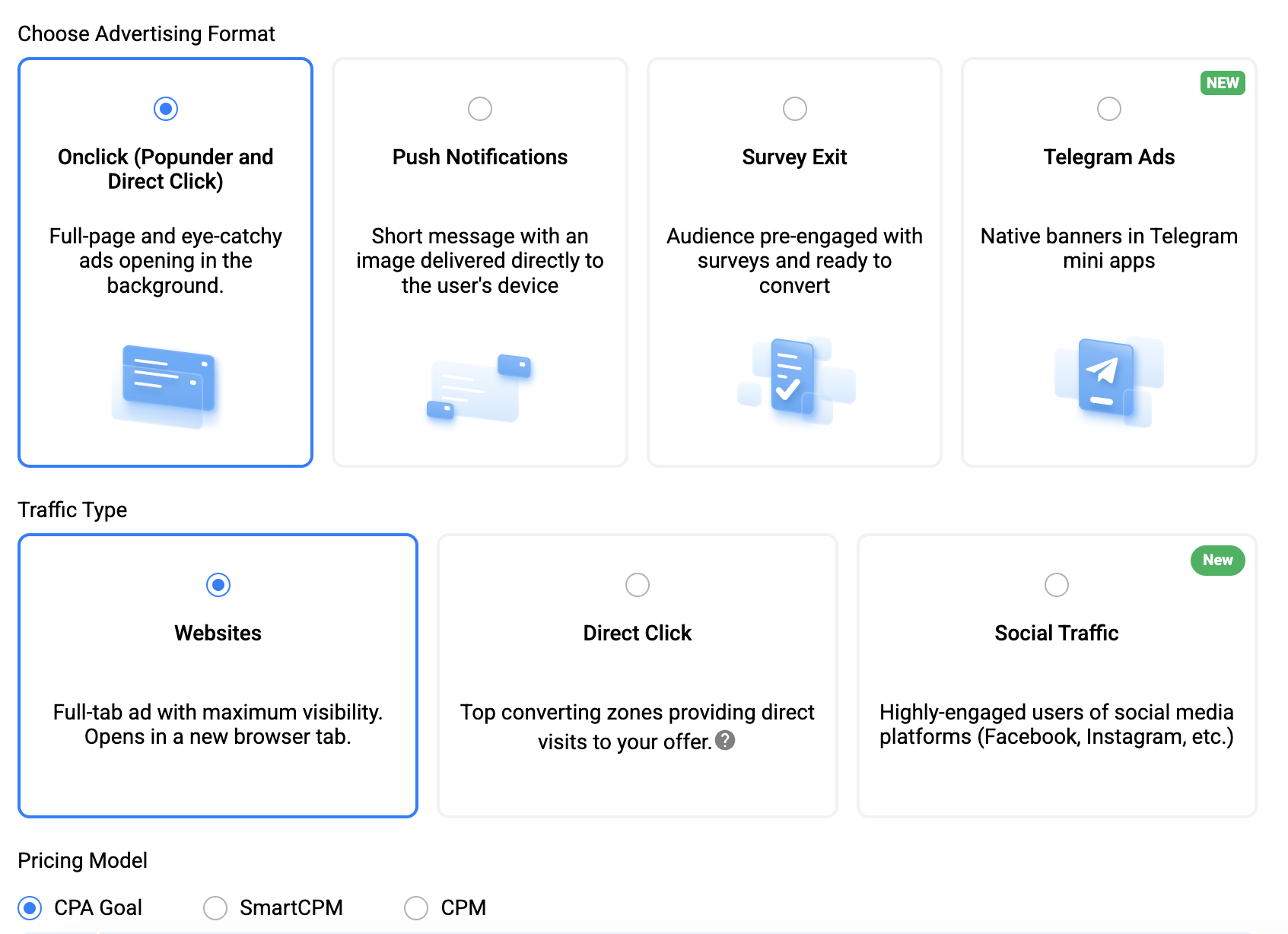
Advertisers select an ad format such as Push Ads, In-Page Push, Popunder, or Telegram Ads. The platform also offers Social Traffic, which aggregates audiences from social environments and allows advertisers to reach users beyond traditional display placements.
-
Then, there is a bidding model choice. Many advertisers enable CPA Goal, an automated bidding model that dynamically adjusts bids based on conversion probability. As the system gathers data, it prioritizes placements and traffic sources that demonstrate stronger performance.
-
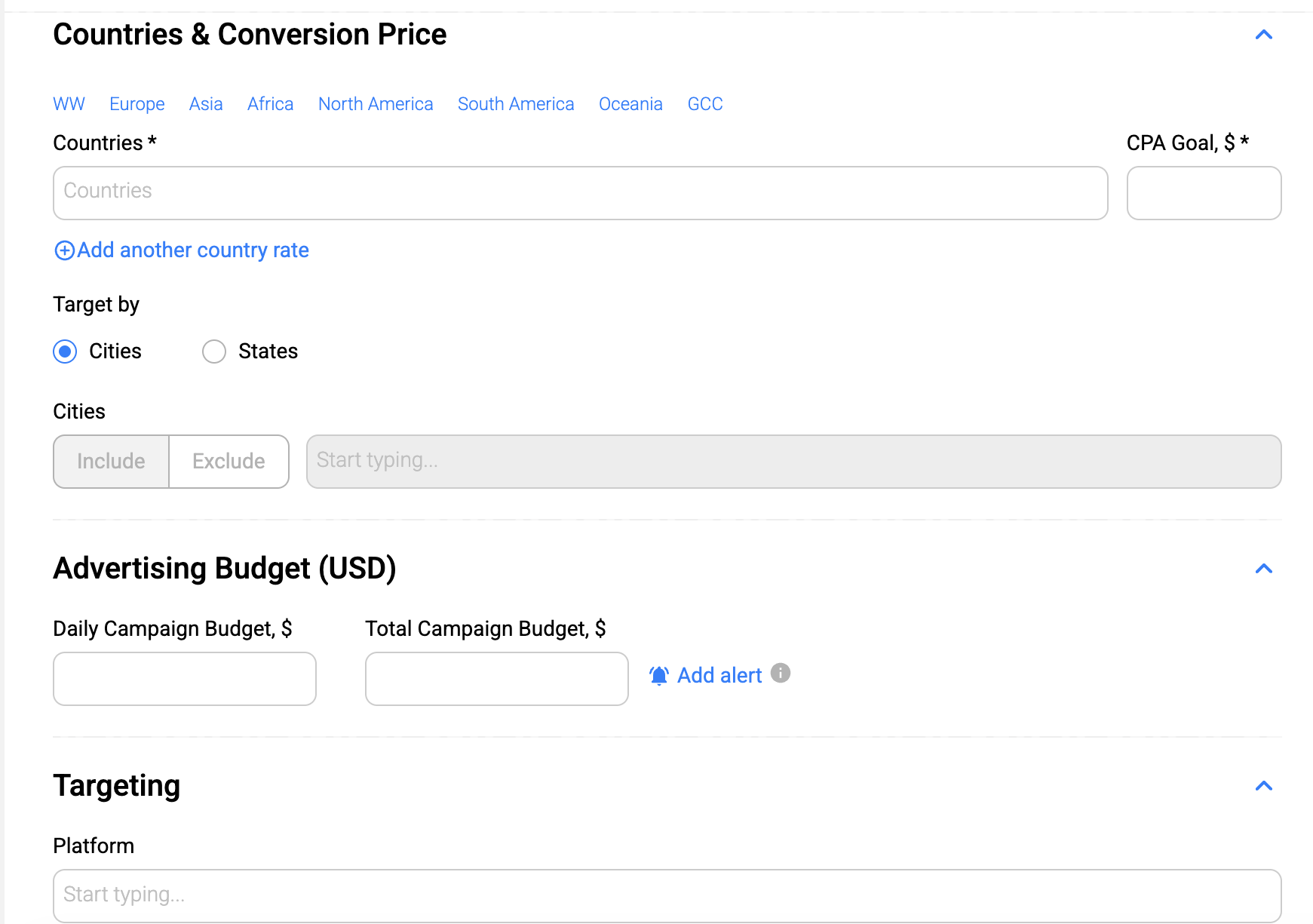
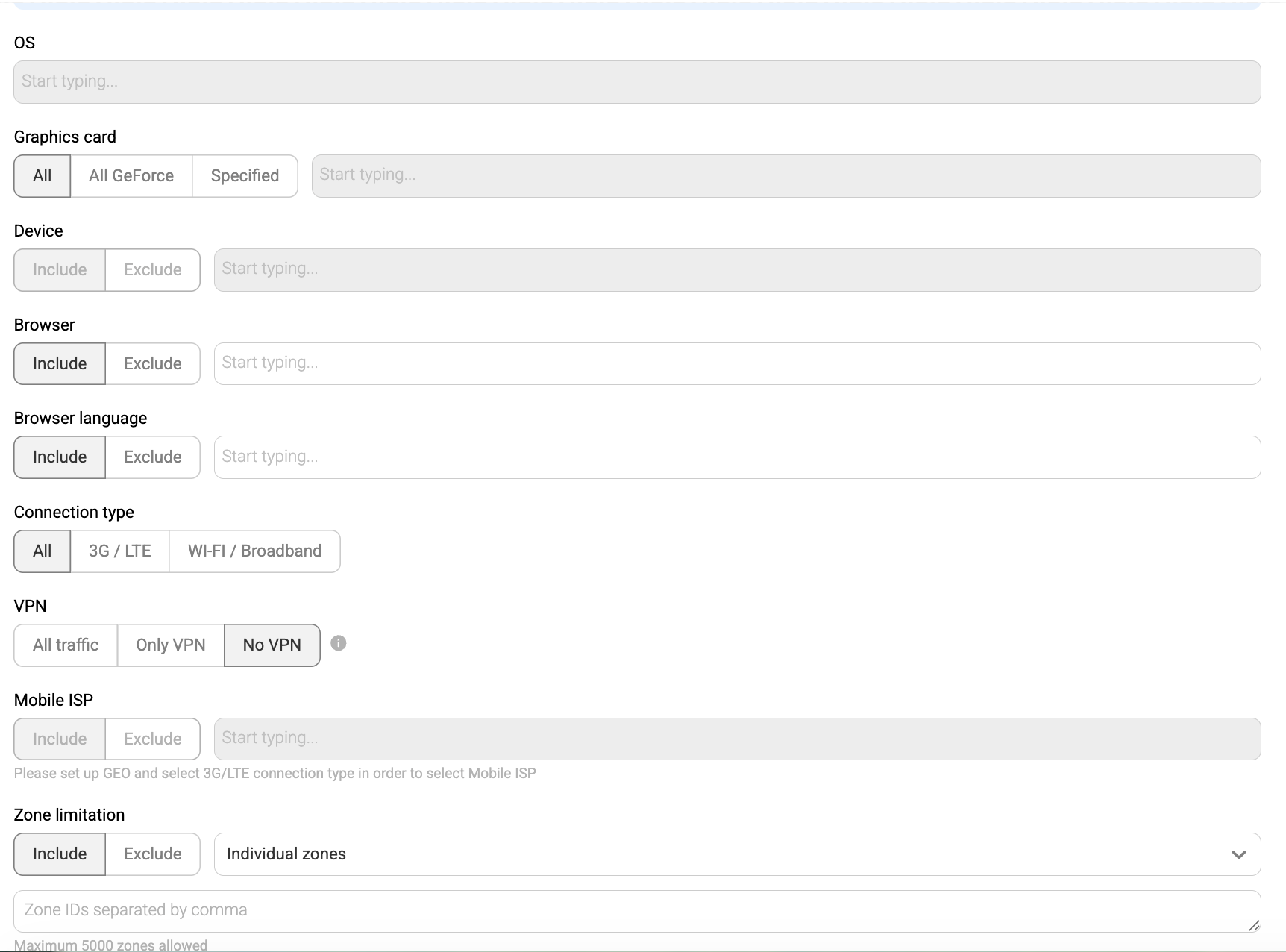
Next, advertisers set their desired budget and configure targeting parameters, including GEO, device type, operating system, browser, connection type, carrier and other parameters.
Campaign performance is measured using conversion tracking, typically implemented through a Postback URL integration or tracking pixels. A Postback URL allows the advertiser’s tracker or affiliate network to send conversion data back to the platform automatically once a target action occurs.
Microsoft Ads (Bing)

Microsoft Ads, formerly Bing Ads, offers a strong alternative to Google Ads, particularly for businesses targeting a mature, affluent audience. With its reach extending across Bing, Yahoo, and AOL, Microsoft Ads captures 38.5% of U.S. desktop search traffic—a sizable chunk of users often overlooked by advertisers.
General statistics and traffic availability
- Microsoft’s consumer base includes over 270 million users globally
- In fiscal year 2024, Microsoft generated around $12.58 billion in revenue from search advertising
- Microsoft Ads reaches users across various platforms, including Bing, Yahoo, DuckDuckGo, MSN, Xbox, Outlook, and AOL
Why choose Microsoft ads?
One of the platform’s biggest draws is its cost-effectiveness. The average CPC for Microsoft Advertising is around $0.84 which is it ideal for businesses looking to stretch their budgets without compromising on visibility.
Bing’s user base also boasts higher purchasing power, with a significant portion aged 35 and older. This makes Microsoft Ads particularly effective for industries such as:
- Finance: Wealthier users are more likely to engage with financial products and services
- Travel: High-ticket travel experiences resonate well with Bing’s audience
- Automotive and Healthcare: Local campaigns targeting specific demographics thrive here

Ad formats and targeting options
Microsoft Ads offers multiple ad formats and targeting options, including:
- Search ads: Appear at the top of Bing search results
- Shopping ads: Showcase product listings with images, titles, and prices
- Multimedia ads: Visually rich formats that enhance engagement
Targeting options are equally versatile. You can fine-tune campaigns based on demographics, location, device type, and even retarget users who previously visited your website. This level of customization allows advertisers to maximize ROI.
When to use Microsoft ads
If your Google Ads campaigns are getting too expensive or you’re struggling to reach older, higher-income users, Microsoft Ads might be the perfect fit. Its lower competition and integration with Google Ads make it easy to import existing campaigns and start scaling with minimal effort.
Microsoft Ads Setup
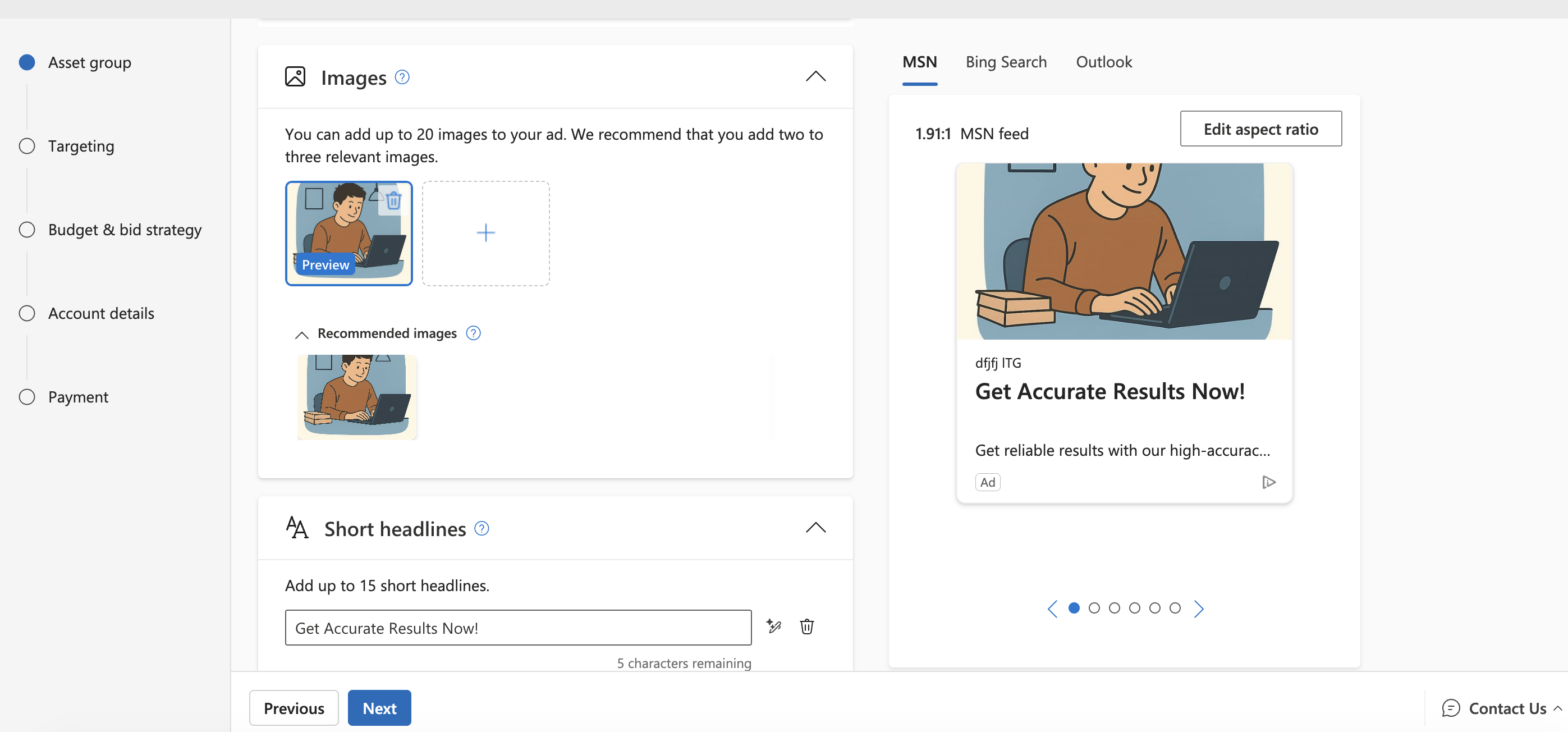
To create a campaign in Microsoft Ads, start by setting up the Asset group, where you upload images and add headlines and ad creatives. Next, configure Targeting, selecting your audience, locations, and other targeting options. Then define your Budget & bid strategy. After that, fill in the required Account details, and finally complete the Payment setup to launch your campaign.
Apple ads

Apple Ads is a specialized advertising platform designed to help businesses promote their apps on the App Store. With over 2 million apps and hundreds of millions of visitors browsing daily, Apple Ads is an optimal way to reach iOS users actively searching for apps.
General statistics and traffic availability
- Apple Search Ads reach over 650 million people from the “Today” tab alone
- There is a 60% average conversion rate for search result ads
- There are 1.56 billion iOS users worldwide
Why choose Apple ads?
Apple Ads is built specifically for app promotion inside the App Store. Unlike broader advertising platforms, it reaches users who are already searching for apps, which makes the traffic highly intent-driven. This makes Apple Ads especially useful for mobile app marketers in gaming, education, fitness, eCommerce, and subscription-based products.
Unlike broader platforms like Google Ads or Bing, Apple Ads focuses exclusively on promoting apps. Ads appear at the top of App Store search results for maximum visibility among users already interested in downloading new apps. This highly targeted approach makes Apple Ads one of the most efficient tools for app discovery.
Apple Ads works best for businesses with iOS apps in industries such as:
- Gaming: Mobile games thrive on App Store promotions
- E-commerce: Apps offering seamless shopping experiences can benefit from increased downloads
- Fitness and health: Popular for apps related to workouts, wellness, and nutrition
- Education: Language learning, coding, or online course apps see significant engagement
Ad formats and targeting options
Apple Ads offers 2 formats:
- Search Ads Basic: Automated campaigns designed for ease of use
- Search Ads Advanced: Provides full control over keywords, audiences, and ad placement
Targeting is built around App Store search behavior, allowing advertisers to refine campaigns by keywords, device type, location, and user demographics. You can also focus on specific app categories to ensure you’re reaching users likely to convert
Cost insights
Apple Ads operates on a cost-per-tap (CPT) model, with an average CPT of $1.00, making it a cost-effective choice for app marketers. The platform’s ability to target users actively searching for apps often results in higher conversion rates compared to other platforms.
Why advertisers choose Apple Ads
- Hyper-targeted audience: Apple Ads reaches users at the exact moment they’re searching for apps, increasing the likelihood of downloads.
- Cost-effective for high-intent users: Its CPT model makes sure you pay only for valuable interactions.
- Simplified campaigns: The intuitive interface makes it easy for advertisers to set up and optimize campaigns without advanced technical knowledge.
Apple Search Ads Setup
Apple Ads campaigns focus on promoting mobile applications within the App Store ecosystem. Apple Ads setup begins with creating an Apple Ads account and linking the app from App Store Connect. The advertiser then creates a campaign in the dashboard, selects the app and placement in the App Store, sets targeting, keywords, bids, budget, and schedule, and launches the campaign while monitoring installs and performance to optimize results.
Tracking is usually implemented through Mobile Measurement Partners (MMPs) such as AppsFlyer or Adjust. These tools connect the advertising platform with app analytics systems to measure installs and post-install events.
Meta Ads (Instagram and Facebook Ads)

Meta Ads is one of the most popular advertising platforms for businesses that want to reach broad, diverse audiences. With a combined user base of 3.5 billion monthly active users on Instagram and Facebook, Meta offers both wide reach and advanced targeting capabilities.
General statistics and traffic availability
- Meta’s platforms have a huge user base, with Facebook reaching 3 billion monthly active users as of December 2023.
- Facebook had 2.11 billion daily active users (DAU) as of December 2023, a 6% increase year over year.
- More than 77% of Internet users, about 3.59 billion people, are active on at least one Meta platform.
Why choose Meta Ads?
- E-commerce: Showcase products with visually appealing ads and drive traffic to your store
- Fashion and lifestyle: Use Instagram’s visual-first platform to connect with style-conscious audiences
- Entertainment: Promote movies, games, or music to engaged communities
- Local businesses: Use location-based targeting to attract customers in your area
Cost insights
Meta Ads operate through an auction system where advertisers compete for impressions based on bid strategy, expected user actions, and ad quality. Campaigns can be billed on metrics such as CPC or CPM, depending on campaign settings and optimization goals. Industry benchmarks suggest that the average CPC for Facebook campaigns is around $1–2, depending on industry and targeting, while Instagram campaigns often show slightly higher click costs due to competition for visual placements.

Ad formats and targeting options
Meta Ads provide flexibility with various ad formats, such as:
- Photo and video ads: Simple yet effective for engagement and storytelling
- Carousel ads: Showcase multiple images or videos in a single ad
- Stories ads: Full-screen vertical ads designed for Instagram and Facebook Stories
- Reels ads: Take advantage of Instagram’s growing focus on short-form video content
Meta’s targeting capabilities are among the most advanced in the industry, allowing advertisers to filter by:
- Demographics (age, gender, location)
- Interests (hobbies, brands, behaviors)
- Custom audiences (based on email lists or website visitors)
- Retargeting (ads for users who interacted with your site or previous ads
Why Advertisers Choose Meta Ads
- Unmatched reach: With billions of users, Meta offers the largest potential audience of any ad platform.
- Advanced analytics: Tools like Ads Manager provide detailed performance insights, making it easy to refine campaigns.
- Engaging formats: Instagram and Facebook are visual-first platforms, making them ideal for eye-catching creative content.
- Strong social proof: Ads can encourage likes, shares, and comments, building trust and engagement organically.
Meta Ads Setup
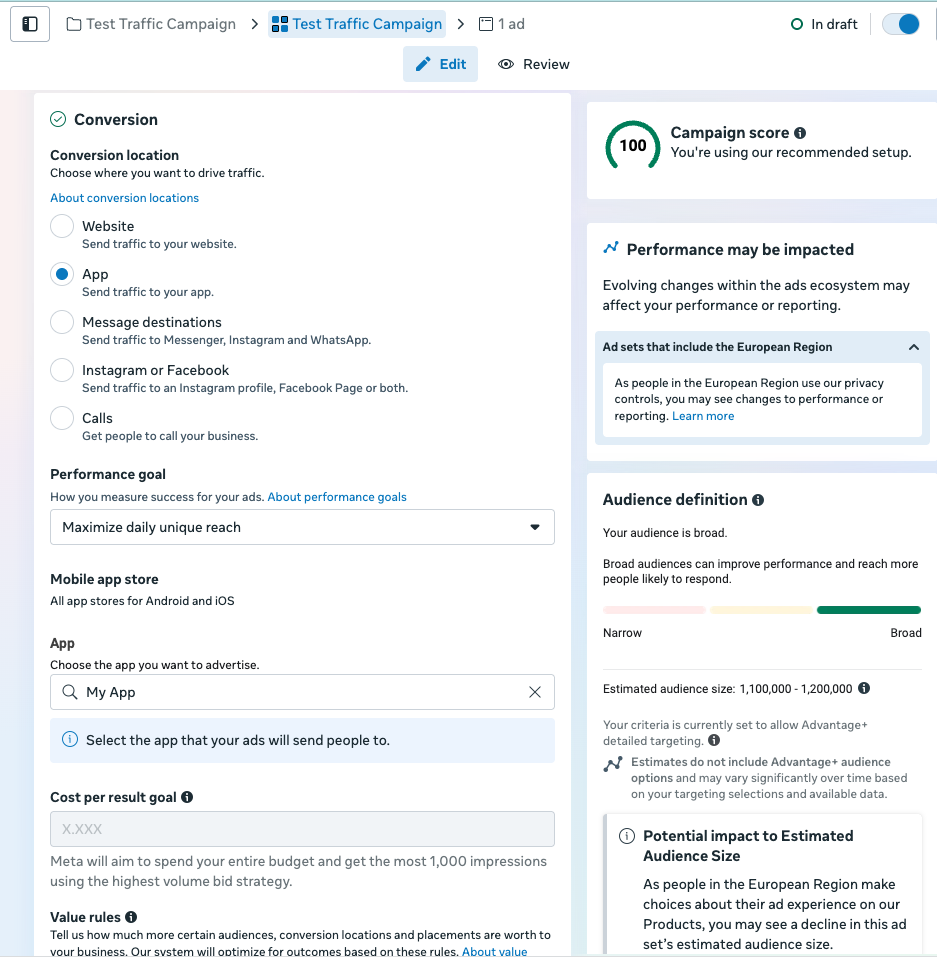
Meta advertising campaigns rely on the Meta Pixel and, increasingly, the Conversions API. Like many large social advertising platforms, Meta operates as a walled garden ecosystem, where campaign data, audience targeting, and attribution models are managed inside the platform’s own infrastructure.
The Meta Pixel is a browser-based tracking script that records user activity after interacting with an ad. Typical tracked events include:
- Page views
- Product views
- Purchases
- Lead submissions
These signals feed Meta’s auction algorithm, allowing the platform to optimize delivery toward campaign objectives such as conversions or lead generation.
Many advertisers complement the pixel with server-side Conversions API integration, which improves attribution accuracy in privacy-restricted environments.
Amazon Ads

Amazon Ads, another Google Ads alternative, is a pay-per-click advertising platform designed to help businesses promote their products directly to millions of active shoppers on Amazon. With a focus on e-commerce, this platform is suitable for brands looking to target high-intent buyers already in the shopping mindset.
General statistics and traffic availability
- Amazon has over 310 million active customer accounts, providing a massive audience for advertisers.
- Amazon’s advertising revenue was approximately $14.3 billion in 2024, indicating the platform’s significant traffic and engagement levels.
- The average conversion rate for Amazon Ads is around 9.96%, which is notably high compared to other digital advertising platforms.
Why choose Amazon Ads?
Amazon Ads lets businesses display their products within Amazon’s search results, product detail pages, and even off-site through its demand-side platform (DSP). With millions of active customers worldwide, Amazon Ads connects advertisers to a massive audience ready to purchase.
Amazon Ads is best suited for:
- E-commerce brands: Retailers selling directly on Amazon benefit from heightened visibility.
- Consumer goods companies: Brands offering fast-moving products like electronics, beauty items, and home goods.
- Publishers and media creators: Authors and media creators promoting books or entertainment-related items.
Cost insights
Amazon Ads operates primarily on a cost-per-click model, with an average CPC of $0.89. While costs vary depending on the category and competition, Amazon Ads delivers a high ROI due to its audience’s strong purchase intent.
Ad formats and targeting options
Amazon offers a variety of ad formats tailored to different campaign goals:
- Sponsored products: Promote individual product listings in search results or on product detail pages.
- Sponsored brands: Highlight your brand logo, tagline, and a selection of products in prominent placements.
- Sponsored display ads: Reach audiences on and off Amazon through retargeting campaigns.
Targeting options include:
- Keyword targeting: Reach shoppers searching for specific terms.
- Product targeting: Advertise on product pages similar to your own offerings.
- Audience targeting: Engage users based on interests, shopping behavior, or demographics
Why Advertisers Choose Amazon Ads
- High-intent audience: Amazon’s shoppers are often ready to buy, leading to higher conversion rates.
- Detailed analytics: Amazon provides a range of in-house reporting tools to refine campaigns and optimize ad spend.
- Competitive visibility: Ads help level the playing field for smaller sellers competing with established brands.
Amazon Ads Setup
Amazon Ads setup starts with creating an account in Amazon Ads through Seller Central or Vendor Central. In Campaign Manager, the advertiser creates a new campaign, selects the ad type (such as Sponsored Products, Sponsored Brands, or Sponsored Display), and adds the products (ASINs) that will be promoted. Next, the advertiser configures targeting (keywords, products, or audiences), sets bids and campaign budget, defines the schedule, and launches the campaign. After launch, performance metrics such as impressions, clicks, sales, and ACOS are monitored in Campaign Manager to optimize the campaign.
Yandex Ads

Yandex Ads, offered by Russia’s leading search engine, is an advertising platform that allows businesses to reach millions of users across Eastern Europe and beyond. Known as the “Google of Russia,”, Yandex reaches over 34 million users regardless of the type of device they are using — from laptops to desktops and every in-between.
General statistics and traffic availability
- Yandex has a monthly audience of approximately 116 million users in Russia, with around 100 million overall reach through its search engine and advertising network
- The platform serves ads to over 48 million users daily, covering about 47% of the Russian internet audience.
- Yandex holds a significant share of the search market in Russia, making it an important platform for advertisers targeting this demographic.
Why choose Yandex Ads?
Yandex Ads is a PPC platform similar to Google Ads, allowing advertisers to promote their products and services through search, display, and video campaigns. With its extensive network of sites and apps, Yandex Ads provides reach far beyond the search engine itself, tapping into an audience of millions of daily users.
Yandex Ads is particularly effective for:
- Local Businesses in Eastern Europe: Ideal for targeting Russian-speaking audiences.
- E-commerce brands: Businesses looking to expand into Russian-speaking markets benefit from its dominance in local search.
- Tourism and travel: Great for promoting travel packages and experiences to Russian travelers.
Cost insights
The cost of advertising on Yandex varies based on several factors, primarily the selected display regions. Yandex Ads typically offers lower CPCs compared to Google Ads in this region, making it a cost-effective choice for businesses looking to optimize ad spend in Eastern Europe.
Ad formats and targeting options
Yandex Ads supports a variety of ad formats, such as:
- Text Ads: Simple ads appearing in search results based on user queries.
- Image Ads: Visual ads displayed on partner sites within the Yandex Advertising Network (YAN).
- Video Ads: Engaging video content shown across various platforms.
- Banner Ads: Display ads that can appear in different sizes and formats on web pages.
- Interstitial Ads: Full-screen ads shown at natural breaks during app usage.
The platform’s advanced targeting options include:
- Demographic targeting: Age, gender, and location-based targeting.
- Behavioral targeting: Based on user interests and online behavior.
- Contextual targeting: Ads matched with relevant user queries to enhance engagement.
- Retargeting options: Showing ads to users who have previously interacted with your website or app.
Why advertisers choose Yandex Ads
- Localized expertise: Yandex is deeply integrated with the Russian market, offering tools and targeting options tailored to local needs.
- Comprehensive ecosystem: The Yandex Advertising Network (YAN) extends your reach to third-party sites and apps.
- Cost efficiency: Lower CPC rates allow advertisers to achieve visibility at a fraction of the cost of Google Ads.
Yandex Ads Setup
Yandex Ads (Yandex Direct) setup begins with creating a Yandex Direct account and opening the campaign creation page. The advertiser enters the website URL, selects campaign settings and targeting such as keywords and regions, sets the budget and bidding strategy, creates ads, and launches the campaign after moderation while tracking conversions through Yandex Metrica.
Yahoo Ads

Yahoo Ads is a digital advertising platform powered by Yahoo Gemini and integrated with the Microsoft Advertising Network. Despite its smaller footprint compared to Google or Bing, Yahoo remains a valuable option for advertisers, particularly in specific niches or when targeting users on platforms like Yahoo Finance, Yahoo Mail, and AOL.
General statistics and traffic availability
- Yahoo has approximately 274 million monthly users in the US as of 2020.
- In October 2024, Yahoo’s organic search traffic reached around 503.86 million visits.
- Yahoo holds about 1.29% of the global search market as of December 2024.
Why choose Yahoo Ads?
Yahoo Ads allows businesses to run PPC campaigns across Yahoo’s ecosystem, including its search engine and partner sites. With millions of monthly active users globally, Yahoo Ads offers advertisers access to an engaged audience, particularly in markets where Yahoo maintains strong brand loyalty.
Yahoo Ads works well for:
- Finance and investment: Yahoo Finance attracts a high-income, business-focused audience.
- Technology: Tech-related services and products perform well on Yahoo’s platforms.
- E-commerce: Retailers targeting users through Yahoo Mail or search ads see steady engagement.
Cost insights
Yahoo Ads often benefits from lower CPCs compared to Google, making it a cost-efficient choice for smaller businesses or those in less competitive industries.
Ad formats and targeting options
Yahoo Ads supports several versatile formats:
- Search Ads: Text-based ads displayed in response to user queries.
- Display Ads: Visual ads shown on various partner sites within the Yahoo network.
- Native Ads: Ads that blend in with the content of Yahoo’s platforms, providing a less intrusive experience 4.
- Video Ads: Engaging video content that can be displayed across Yahoo properties.
- Edge-2-Edge: Premium ad formats designed for maximum visibility across devices 10.
Targeting options include:
- Demographic targeting: Age, gender, and location-based targeting.
- Interest-Based targeting: Target users based on their interests and online behavior.
- Behavioral targeting: Reach audiences based on their past interactions with your brand or similar products.
- Custom audiences: Create tailored audiences based on your existing customer data

Why advertisers choose Yahoo Ads
- Engaged niche audiences: Platforms like Yahoo Finance and Mail attract a dedicated user base with high engagement.
- Native ad formats: Native placements ensure less disruption and higher click-through rates.
- Lower competition: Fewer advertisers mean better ad placements at reduced costs compared to Google or Bing.
Yahoo Ads Setup
Yahoo Ads setup is similar to other ad platforms. The advertiser creates an account, sets up a campaign, chooses targeting and budget, creates ads, and launches them in the Yahoo Ads dashboard.
Tracking is done using conversion tracking tags or pixels installed on the website, which record actions such as purchases or sign-ups after a user clicks the ad. Performance (clicks, conversions, cost, etc.) can then be monitored directly in the Campaign Management Tool reports and conversion tracking dashboard.
LinkedIn Ads

LinkedIn Ads is the go-to platform for businesses aiming to connect with a professional audience. LinkedIn is particularly effective for B2B advertising, employer branding, and reaching decision-makers in various industries.
General statistics and traffic availability
- LinkedIn has over 1 billion members globally, with approximately 310 million monthly active users as of 2024.
- LinkedIn has 65 million business decision-makers and 10 million C-level executives.
- Approximately 134.5 million users actively use LinkedIn each day.
Why choose LinkedIn Ads?
LinkedIn Ads offers targeted advertising opportunities on the platform, allowing brands to promote their services, products, and content directly to professionals based on their job roles, industries, and skills. The platform excels at demand generation and nurturing high-value leads.
LinkedIn Ads is ideal for:
- B2B companies: Engage decision-makers, executives, and professionals who influence purchasing decisions.
- Recruitment and employer branding: Promote job opportunities or showcase company culture.
- Education and training: Advertise courses, certifications, or training programs targeting career-driven individuals.
Cost insights
LinkedIn Ads tend to be more expensive than other platforms, with an average CPC of $5.26 and CPMs around $33.80. While costs are higher, the platform’s precise targeting and access to a high-quality audience often deliver strong ROI for businesses focused on professional markets.
Ad formats and targeting options
LinkedIn offers a variety of ad formats to engage its audience:
- Sponsored content: Native ads that appear in the LinkedIn feed, including single image ads, carousel ads, and video ads.
- Sponsored messaging: Personalized messages sent directly to users’ inboxes (Message Ads and Conversation Ads).
- Dynamic ads: Personalized ads that adapt based on user profile data.
- Text ads: Simple text-based ads displayed in the right column of the desktop version.
- Document ads: Allow users to share documents directly in their feed for lead generation or engagement.
Targeting options include:
- Firmographics: Industry, company size, and revenue.
- Job data: Job title, function, seniority, and years of experience.
- Audience retargeting: Re-engage users who’ve visited your site or interacted with your LinkedIn content.
Why Advertisers Choose LinkedIn Ads
- Professional audience: LinkedIn attracts an audience focused on business, making it a perfect platform for B2B brands.
- Precise targeting: Firmographic data allows advertisers to reach specific industries, job levels, and decision-makers.
- Content integration: Ads blend naturally into users’ feeds, increasing engagement without disrupting the browsing experience.
- Lead generation tools: Native lead forms simplify data collection, improving conversion rates.
LinkedIn Ads Setup
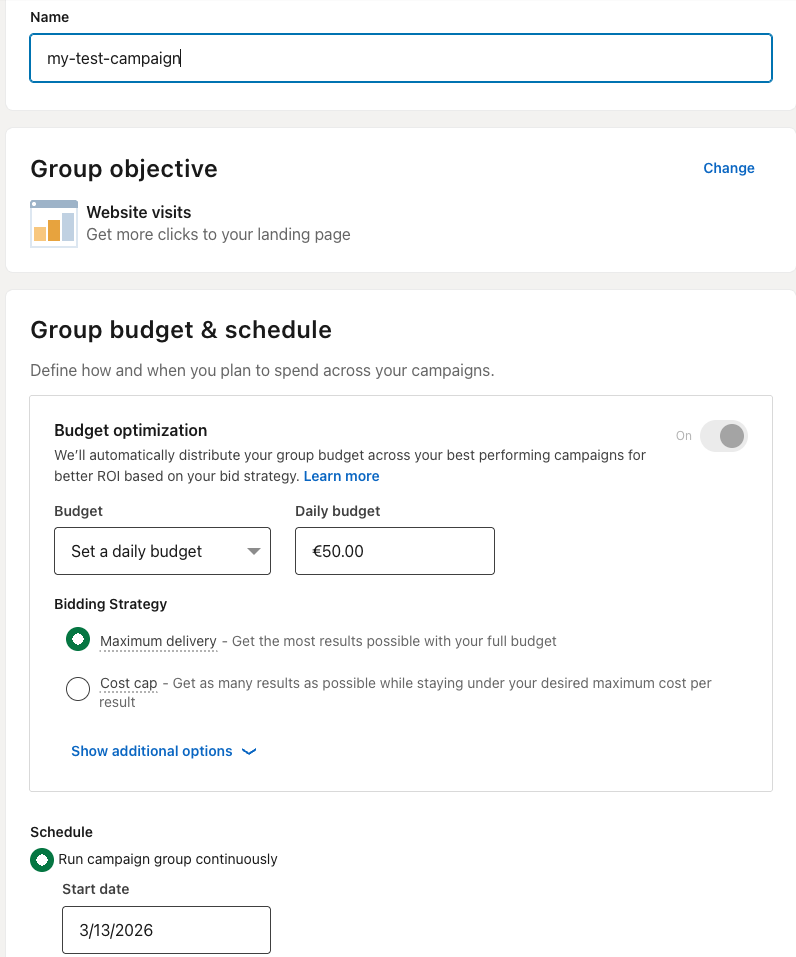
LinkedIn Ads setup starts with creating a campaign in Campaign Manager, selecting the objective, audience, budget, and ad format, then launching the ads. Tracking is done via the LinkedIn Insight Tag, a JavaScript snippet installed on the advertiser’s website.
The Insight Tag allows advertisers to:
- track conversions
- build retargeting audiences
- analyze demographic attributes of website visitors
Reddit Ads

Reddit Ads provide a unique opportunity for businesses to reach highly engaged niche communities. Known as “the front page of the internet,” Reddit has over 97.2 million daily active users participating in discussions across thousands of interest-specific subreddits, making it an ideal platform for targeting specific demographics.
General statistics and traffic availability
- The platform boasts 430 million monthly active users.
- Reddit generated $315 million in ad revenue in Q3 2024, a 56% growth rate from 2023.
- 48% of Reddit’s users are from the United States.
Why choose Reddit Ads?
Reddit Ads allow brands to place promoted posts or display ads within users’ feeds or specific subreddits. Unlike other social platforms, Reddit thrives on community-driven conversations, meaning ads that align with the platform’s tone and values are more likely to succeed.
Reddit Ads work particularly well for:
- Tech and gaming brands: Communities dedicated to gaming, programming, and hardware are highly active.
- Entertainment and media: Promote movies, shows, or events to communities passionate about specific genres.
- E-commerce: Niche products often find strong traction in subreddits focused on specific interests (e.g., DIY, fitness, or gadgets).
Cost insights
Reddit Ads are budget-friendly, with an average CPC as low as $0.20. This low cost makes it an appealing choice for small businesses or brands experimenting with new advertising strategies.

Ad formats and targeting options
Reddit supports several ad formats designed to integrate seamlessly with its user experience:
- Promoted posts: These ads appear within the organic feed of a subreddit, blending seamlessly with user-generated content.
- Display ads: Visual ads that appear in various placements across Reddit, including the sidebar and top banner.
- Video ads: Engaging video content that can be displayed within feeds or as standalone ads.
- Takeover ads: Premium ads that allow brands to “take over” a specific subreddit for a day, ensuring maximum visibility.
- Trending takeover ads: This format places your ad at the top of Reddit’s popular feed for broad exposure.

Targeting options include:
- Subreddit targeting: Target users based on their interests by selecting specific subreddits.
- Demographic targeting: Target users based on age, gender, and location.
- Interest-based targeting: Reach users based on their interests and online behavior.
- Custom audiences: Create tailored audiences based on user interactions or uploaded customer lists.
Why Advertisers Choose Reddit Ads
- Highly engaged communities: Users are deeply invested in their chosen subreddits, making them more likely to engage with relevant ads.
- Cost efficiency: Low CPC rates provide excellent value for advertisers on a budget.
- Niche targeting: The ability to target specific subreddits ensures your ads are seen by the right audience.
Reddit Ads Setup
Reddit Ads setup begins with creating a Reddit Ads account and opening Ads Manager. The advertiser creates a campaign, selects an objective (such as awareness, traffic, or conversions), sets targeting like subreddits, interests, or demographics, defines the budget and bid, and publishes a promoted post or other ad format. Performance is tracked in the Reddit Ads dashboard, and conversions can be measured using the Reddit Pixel or Conversions API installed on the website.
Quora Ads

Quora Ads allow businesses to connect with a highly engaged audience actively seeking answers and exploring topics. With over 400 million monthly active users, Quora offers a unique advertising opportunity to target users based on their interests, questions, and search intent
General statistics and traffic availability
- 56.5% of the Quora users are men, while 43.2% are women.
- Most Quora users are aged 25 to 34, accounting for 30.11% of the platform user base.
- Quora recorded 27 million daily active visitors on average.
Why choose Quora Ads?
Quora Ads appear in various placements across the platform, including in question threads, topic pages, and user feeds. The platform’s focus on knowledge-sharing makes it ideal for businesses that want to establish authority and connect with audiences actively researching their products or services.
Quora Ads are particularly effective for:
- B2B companies: Engage professionals exploring industry-specific topics.
- Education and training providers: Advertise courses, certifications, or guides to users seeking skill development.
- Tech and SaaS brands: Showcase solutions to users asking about software or tech products.
- E-commerce: Promote niche products in relevant threads.
Cost insights
Quora Ads are budget-friendly, with an average CPC starting at $0.35 – $0.75. This low cost, coupled with Quora’s intent-driven audience, often results in strong ROI for businesses focused on lead generation and website traffic.
Ad formats and targeting options
Quora offers flexible ad formats to suit various campaign goals:
- Text ads: Simple text-based ads that appear in the feed or alongside questions.
- Image ads: Visual ads that enhance engagement and can be displayed in various placements.
- Promoted answers: Sponsored content that highlights specific answers to questions, increasing visibility.
- Lead gen forms: Ads designed to capture user information directly within the platform.
Targeting options include:
- Contextual targeting: Place ads alongside relevant questions and topics.
- Keyword targeting: Target users based on specific keywords they are searching for.
- Audience targeting: Reach users based on their interests and behaviors.
- Website traffic targeting: Deliver ads to users who have previously visited your website.
- Lookalike audience Targeting: Target users similar to your existing customers.
Why Advertisers Choose Quora Ads
- High-intent audience: Users are actively seeking answers, making them more receptive to solutions and offers.
- Precise targeting: The ability to target by questions or topics ensures your ads reach highly relevant audiences.
- Thought leadership: Promoted answers help establish your brand as an authority, building trust and credibility.
- Cost-effectiveness: Low CPCs make Quora Ads accessible even for small businesses.
Quora Ads Setup
Quora Ads setup is similar to other ad platforms. The advertiser creates a campaign in Quora Ads Manager, selects the objective, targeting, budget, and ad format, and launches the ads. Tracking is done using the Quora Pixel, which is installed on the website to measure conversions and campaign performance.
Once installed, the pixel records actions such as:
- page views
- sign-ups
- purchases
These events allow the platform to optimize campaigns and improve delivery toward high-conversion placements.
TikTok Ads

TikTok Ads provide a powerful way to connect with a younger, highly engaged audience through creative, short-form videos. With over 1 billion monthly active users, TikTok has become one of the fastest-growing social media platforms, offering businesses an unparalleled opportunity to showcase their brand in a dynamic, engaging environment.
General statistics and traffic availability
- TikTok is projected to reach 2.14 billion users worldwide in 2025, indicating significant growth potential for advertisers.
- TikTok ads have the potential to reach 1.604 billion adults aged 18 and older, surpassing Instagram’s reach.
- About 92% of TikTok users take some action after watching a video, with 37% having purchased something they discovered on the platform.
Why choose TikTok Ads?
TikTok Ads are video-based campaigns designed to capture attention as users scroll through their For You page. The platform’s algorithm prioritizes relevance and engagement, giving advertisers the ability to reach targeted audiences organically and through paid promotions.
TikTok Ads are ideal for businesses in industries that thrive on creativity and visual storytelling, such as:
- Fashion and beauty: Showcase trends, products, and tutorials to style-conscious users.
- E-commerce: Promote products directly using TikTok’s in-app shopping features.
- Entertainment: Engage audiences with trailers, teasers, or interactive campaigns.
- Fitness and health: Highlight workout routines, wellness tips, or activewear in engaging formats.
Cost insights
TikTok Ads typically operate on a CPC CPM model. Average costs include:
- CPC: $0.68
- CPM: $4.90
While the costs are competitive, the platform’s high engagement rates often deliver exceptional ROI, especially for brands targeting Gen Z and millennials.

Ad formats and targeting options
TikTok Ads offers several ad formats:
- In-feed ads: Native ads in users’ feeds as they scroll through content.
- TopView ads: Full-screen ads that appear when users open the app.
- Branded hashtag challenges: Interactive campaigns encouraging users to create content around a specific hashtag.
- Branded effects: Users can apply custom filters or effects to their videos.
- Spark ads: Ads that allow brands to promote organic content created by users.
Targeting options include:
- Demographics: Age, gender, and location.
- Interests: Target users based on their activity, such as following fitness or beauty accounts.
- Behavioral targeting: Reach users based on how they interact with videos and ads.
- Custom audiences: Use retargeting to engage users who’ve interacted with your site or app.

Why advertisers choose TikTok Ads
- High engagement rates: TikTok users spend an average of 52 minutes daily on the app, providing ample opportunities to capture attention.
- Creative freedom: The platform encourages playful, authentic, and creative content that resonates with audiences.
- Massive reach: TikTok’s global audience spans over 150 countries, ideal for brands seeking broad exposure.
- In-app shopping: TikTok’s shopping features make it easier to drive conversions directly from ads.
TikTok Ads Setup
TikTok Ads setup begins with creating a TikTok Ads Manager account and installing the TikTok Pixel or Events API on the website to track user actions and conversions. The advertiser then creates a campaign, chooses an objective (such as awareness, traffic, or conversions), sets targeting, budget, and bidding at the ad group level, uploads video creatives, and launches the ads.
Campaign performance and conversions are monitored in TikTok Ads Manager reporting, using data collected through the Pixel or Events API.
Many advertisers implement server-side tracking alongside the pixel to improve attribution reliability.
The Economics of Ad Platforms (Data-Driven)
Average CPC benchmarks and bidding entry thresholds across major advertising platforms. Data updated: Q1 2026
Bid Strategy Mechanics: CPC vs CPM vs CPA
Advertising platforms support different bidding models depending on campaign goals.
CPC (Cost Per Click)
With CPC bidding, advertisers pay only when a user clicks on an ad. This model is common in search advertising and traffic acquisition campaigns.
CPM (Cost Per Mille)
CPM pricing is based on impressions rather than clicks. Advertisers pay for every 1,000 ad impressions delivered. This model is often used for brand awareness campaigns and large-scale reach.
CPA (Cost Per Acquisition)
CPA-based bidding focuses on achieving a target conversion cost. Instead of manually adjusting bids, the platform’s algorithm analyzes conversion signals and dynamically adjusts traffic delivery to reach the desired acquisition cost.

Automated CPA bidding models are commonly used in performance marketing campaigns where advertisers aim to scale traffic while maintaining stable acquisition costs.
Anti-Patterns: How to Burn Your Budget
Even experienced media buyers occasionally lose budget not because the platform fails, but because of configuration mistakes during the early stages of campaign setup.
Across different advertising ecosystems, several recurring patterns consistently lead to inefficient spending, unstable optimization cycles, or inaccurate performance signals. Recognizing these anti-patterns early can help advertisers avoid unnecessary testing costs and shorten the path to stable campaign performance.
Overly Broad Targeting in Search Campaigns
One of the most common issues in search-based advertising platforms such as Microsoft Ads is launching campaigns with overly broad targeting.
New advertisers often start with wide keyword groups, minimal audience filters, and large GEO segments in order to “collect more data.” In practice, this approach can quickly dilute campaign performance.

Broad targeting may generate a high volume of impressions and clicks, but a large portion of that traffic may not match the advertiser’s conversion intent. As a result, campaigns accumulate cost before the optimization algorithm has enough high-quality signals to adjust delivery.
A more stable approach is to begin with narrower keyword clusters, clearly defined GEO targeting, and specific audience segments. This allows the algorithm to learn from higher-intent traffic first before expanding reach.
Ignoring Creative and Policy Moderation on Social Platforms
Social advertising platforms such as Meta operate under strict ad moderation systems. Campaign performance can be disrupted when advertisers overlook policy restrictions or creative guidelines during the campaign launch phase.
For example, creatives that include prohibited claims, misleading messaging, or restricted vertical elements may be rejected during moderation. In some cases, repeated violations can temporarily limit account delivery or disable certain advertising features.

Even when ads are technically approved, poorly adapted creatives can trigger low relevance scores or limited delivery within the platform’s auction system.
Before launching large-scale campaigns, advertisers typically test multiple creative variations and verify compliance with platform policies. This reduces the risk of sudden delivery interruptions once budgets increase.
Incorrect Attribution and Conversion Tracking
Another frequent source of budget inefficiency is inaccurate attribution setup.
When conversion tracking is not configured correctly, optimization algorithms receive incomplete or delayed performance signals. This affects automated bidding models across nearly all platforms.
For example, in performance-driven environments such as PropellerAds campaigns, advertisers often rely on postback tracking or conversion pixels to measure results. If the tracking parameters are misconfigured, the platform may attribute conversions incorrectly or fail to register them altogether.

When this happens, automated optimization tools cannot properly identify which traffic sources generate conversions. As a result, the campaign may continue delivering impressions to lower-performing placements.
To avoid this issue, advertisers typically verify the tracking flow before scaling budgets by confirming that:
- conversion events are recorded correctly
- tracking parameters match campaign identifiers
- attribution windows are consistent across platforms and trackers.
Scaling Too Early Without Stable Conversion Data
Another frequent mistake occurs when advertisers increase budgets before campaigns reach a stable optimization phase.
Most advertising algorithms require a learning period during which the platform analyzes traffic quality, conversion signals, and engagement patterns. If budgets are increased significantly during this phase, the system may struggle to identify reliable performance signals.

As a result, the campaign may enter repeated optimization cycles without reaching stable CPA or ROI targets.
In practice, experienced media buyers usually wait until campaigns accumulate a consistent number of conversions before scaling budgets or expanding targeting parameters.
Final Observation
Across most advertising ecosystems, inefficient campaigns rarely result from a single mistake. Instead, budget loss typically occurs when several small configuration issues combine: broad targeting, incomplete tracking data, and early scaling decisions.
Avoiding these patterns does not guarantee immediate profitability, but it significantly improves the probability that platform algorithms receive the signals required to optimize campaign delivery effectively.
Come join us on Telegram for more insights and communications with fellow-affiliates!