How Influencer-Led Content Becomes the Pre-Funnel in iGaming?
Influencer marketing has become one of the most discussed acquisition channels in iGaming. But beyond visibility and engagement, it is increasingly being used as a structural part of the funnel.
In this article, we look at how influencer-led content can act as a pre-funnel layer, warming up audiences before they ever reach a performance campaign, and how advertisers can monetize it.
iGaming Under Pressure: Why Traditional Funnels are Breaking
As a rule of thumb, the tighter the rules get, the more creative the industry becomes. That pattern is clearly visible in iGaming today.
Paid traffic channels are facing stricter moderation, compliance requirements are becoming heavier, and users have grown skeptical after years of aggressive banners promising free perks and skyrocketing bonuses. Undoubtedly, traditional acquisition funnels still exist, but they are becoming less efficient.
A user clicks an ad, lands on a page, registers, and maybe…deposits.
On paper, the structure looks perfectly logical. In practice, however, many users reach that landing page without fully understanding how the product actually works. The result is predictable: some users drop off, others claim bonuses, and disappear. Retention suffers, and keeping players becomes more expensive.

The funnel still works. But it leaks.
To deal with that leak, many brands are quietly returning to something that feels almost old-school: native content created by real people. Influencer-led content now acts as a pre-funnel layer, warming up the audience, reducing friction, and bringing more informed users into the performance funnel. From an SEO perspective, this shift also aligns with how discovery happens today: users often encounter products through content first, not ads, long before they ever search or click on a performance campaign.
What a “Pre-Funnel” Actually Means
First things first.
In traditional performance marketing, the funnel begins with an advertisement. A user clicks the ad, lands on a page, and is expected to quickly understand the offer and decide whether to register or deposit.
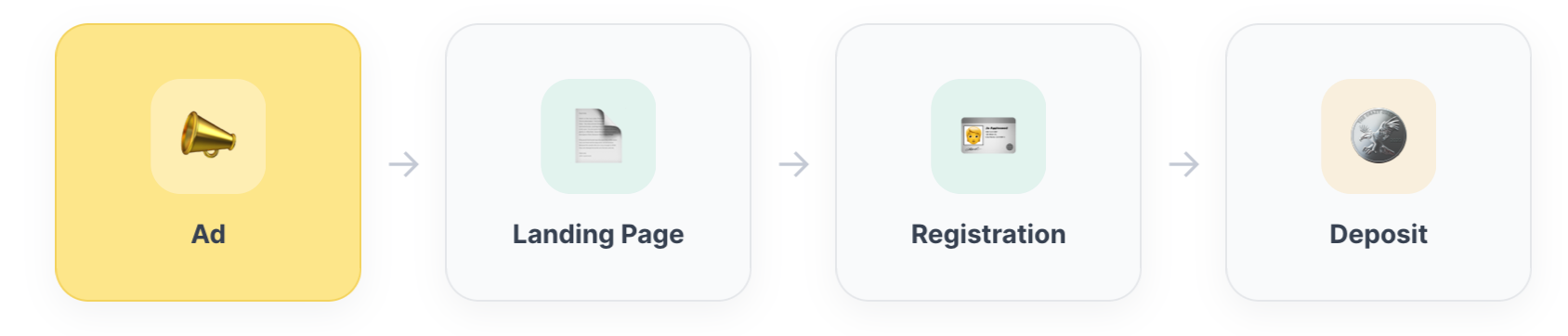
The problem is…The first interaction happens through a sales message, not through an experience. Users often arrive with limited context, which increases hesitation and drop-offs.
Influencer-driven funnels change the order of events.

Instead of starting with persuasion, they begin with context and demonstration. Users first see the product in action, understand how it works, and only then decide whether to continue into the funnel.
And hey, this really changes the game, doesn’t it?
Why Influencer-Led Content Works as a Pre-Funnel Layer
As always, context plays the key role.
When users encounter a traditional advertisement, they expect to be persuaded. Their default reaction is skepticism. They know they are being sold to, which means they immediately start evaluating whether the offer is trustworthy, exaggerated, or simply not worth their time.
Influencer content creates a completely different vibe…
The audience is not there because they are looking for an offer. They are there to see a specific personality and hear their story. Instead of being pushed toward a conversion, they are gradually introduced to an experience.
Think about it…
When you watch a creator in this space, you usually see them streaming gameplay, explaining how the interface works, reacting to wins and losses, or casually walking viewers through game mechanics. By the time you notice a link in the description or a pinned message, the product is no longer abstract – you have already seen how it works. At that point, clicking through feels like a natural next step rather than a forced conversion.
Expectation alignment begins to change the dynamics of the funnel. When users enter already knowing what to expect, CTAs tend to be more deliberate, and opportunistic behavior like bonus hunting becomes less common.
In other words, the audience arrives pre-educated. And once you start working with pre-educated traffic, the performance stage of the funnel begins to behave very differently (in unexpectedly good ways!).

What Happens After Influencer Traffic Enters the Funnel
Once influencer content sparks interest and brings users into the funnel, the next challenge is turning that initial curiosity into real action. Watching a creator play or explain the mechanics may build trust and understanding, but it doesn’t automatically lead to a deposit. At this stage, the audience already knows the product – what matters now is guiding them toward the next step without breaking that context.
This is where performance channels begin to play their role. They help maintain momentum after the first interaction and reconnect with users who showed interest but didn’t complete the journey right away. Naturally, you might be thinking: “Okay, but what do we actually do at this stage?”
This is where performance channels come into play. They help you re-engage users who clicked but didn’t deposit, expand campaigns in GEOs that are already showing traction, and gently bring players back with formats like push notifications when they’re ready to continue.
Platforms like PropellerAds are often used at this stage to turn early interest into measurable conversions while keeping the funnel moving forward.
How It Works in Practice: Real Campaign Examples
The theory sounds convincing, but what does this actually look like in practice?
That’s a good question…
Across the iGaming industry, influencer-driven funnels are already being exploited in several formats. Some revolve around live gameplay streams, others focus on tutorials or community-driven content on messaging platforms. Despite their differences, they all follow the same principle: users experience the product before entering the performance funnel.
Let’s dive a little bit deeper into it…
Streamer-Led iGaming Launches
A great example of this format is Roshtein, one of the most recognizable iGaming streamers, known for broadcasting gaming sessions to thousands of viewers on platforms like Kick and YouTube. His streams don’t feel like ads. Instead, they look more like live entertainment: playing a game, reacting (sometimes dramatically) to wins and losses, and chatting with the audience about how different games can behave.
For viewers, the product becomes familiar long before they ever see a registration page. They watch the interface, understand the pace of the game, and get a sense of what actually happens during a real session. Therefore, when the time comes, and a referral link appears in the stream description or chat, it doesn’t feel like a hard sell. It feels more like, “Okay… I’ve been watching this for an hour, maybe I’ll try it too.”
And that’s exactly what we were talking about earlier… the influencer’s content starts acting as a pre-funnel layer (allowing users to understand the experience before they ever enter the performance funnel).
Game Demo Walkthrough Influencers
Another format shifts the focus away from pure entertainment and toward explanation. A popular YouTube creator with over 100k followers who regularly plays and reviews different gameplays, essentially acting as someone who shows viewers the ropes – pointing out how certain features trigger, what to expect from the pacing of the game, and when things can suddenly go very right… or very wrong.
This kind of content attracts viewers who are genuinely curious about the game itself (and not just its flashy banner!).
Telegram Gaming Communities
Telegram introduces a slightly different dynamic. In many regions (particularly Eastern Europe and parts of Asia), creators build tight-knit gaming communities rather than just broadcasting content. Instead of scrolling past posts like on traditional social media, users join channels where gameplay clips and discussions happen in the same space.

A good example is Arina Savastru, a blogger who teamed up with a popular iGaming brand. On her Telegram channel, she goes beyond just promoting offers. She weaves iGaming gameplay into her regular content. In short Telegram videos, she shares real sessions and commentary tailored for audiences in former CIS countries. Her tone feels natural and focused on experience, not just promotion.
This format is easily killing two birds with one stone:
- filters the audience and sets expectations
- encourages users to take action without pressure
Case Study: Playbet.io
To see how this works in practice, consider a campaign run for the iGaming brand Playbet.io, which used Twitch streamers to introduce the platform to new audiences. Instead of running traditional ads, the campaign partnered with 7 gaming streamers who showcased the platform during their live sessions. The streams weren’t framed as direct promotions.
Viewers watched real gameplay, saw the interface in action, and could ask questions in chat while the creators played. Links and bonuses were introduced naturally during the broadcast through chat commands and stream descriptions.

The results showed why this format works so well as a pre-funnel layer. The campaign generated 7,555 clicks and 499 registrations, and 95 of those users went on to make their first deposit. That translated into roughly a 31.9% conversion rate from registration to deposit, which is a strong signal that the audience arriving from the streams already understood what they were signing up for.
Counterarguments: Why “Influencers Don’t Convert”
At this point, a fair question usually appears:
But don’t influencer campaigns struggle to convert?
An honest answer is that sometimes, they do. And interestingly, research suggests that the issue often comes down to how audiences perceive influencer content itself. A recent study published in the Journal of Marketing Analytics points out that one of the growing concerns around influencer marketing is declining perceived authenticity.
When audiences start feeling that creators are promoting too many products or doing overly scripted promotions, trust drops (and so does the likelihood of taking action).
This shift is already being discussed by people working directly with influencer campaigns, e.g., PR strategist Ksenia Rusakova, who put it quite bluntly in her Telegram post:
“Businesses will start choosing leads instead of virality. PR managers will begin calculating the cost of registration rather than the cost of views… Everyone is getting tired of paying for ‘eyeballs’ without seeing actual money.”
And honestly, that’s the core of the issue.
Where Things Tend To Go Wrong
Based on what we noticed, most problems fall into a few predictable patterns:
1. Pure exposure instead of performance. A creator posts content, the stream gets views, engagement looks great… and that’s where it ends. No tracking, no attribution, and absolutely no understanding of what actually happens after the click.
2. Wrong expectations from the funnel. Remember how we said that people come for entertainment first? If the funnel stops at the content, attention fades as soon as the stream ends. Without retargeting or follow-up, interest doesn’t turn into action, and users who were supposed to turn into leads melt away.
3. Vanity metrics over real outcomes. Big numbers may look impressive… but they don’t mean much on their own. Views and followers don’t automatically mean deposits, and focusing on them can hide the real performance picture.
Why Influencer Funnels Fail
The strategy doesn’t fail because creators “don’t convert.”
It fails when everything stops at the content itself.
The Real Issue Isn’t Conversion
What this really shows is actually pretty simple. Influencer campaigns don’t fail because creators “don’t convert”. They fall short when everything stops at the content itself. We’ve seen this happen more than once – great engagement, strong reactions, and then… nothing, because there’s nowhere for that interest to go.
However, when you treat influencer activity as the starting point (rather than the end), it stops being just visibility and starts working like the first real step in a measurable and performance-driven funnel.
How to Structure Influencer Traffic for Measurable ROI
Once influencer content starts bringing people into the funnel, the next step is making sure that traffic can actually be measured and optimized. Otherwise, you’re just collecting views without really understanding what they lead to.
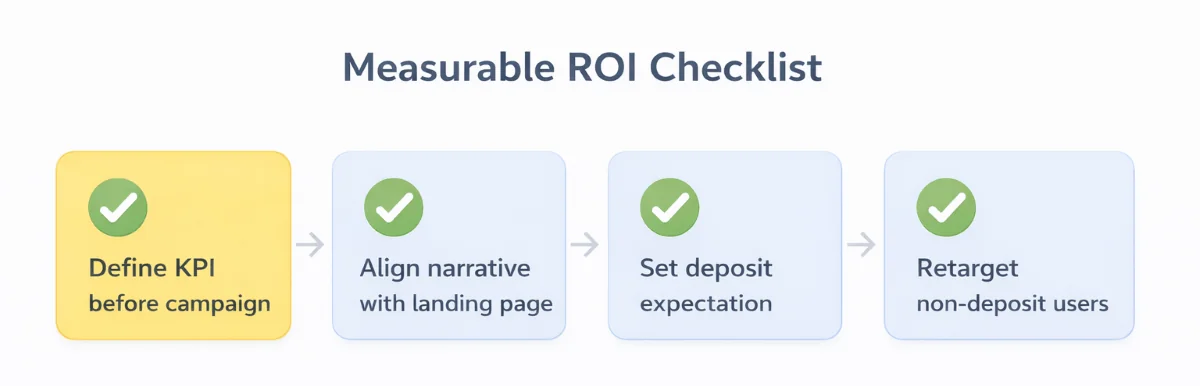
To make influencer-driven traffic measurable and scalable, several structural elements need to be in place:
1. Set up proper tracking
Each creator should use unique tracking links so you can clearly see which audience is generating registrations or deposits. Postback integration is equally important, as it connects actions inside the funnel (such as sign-ups or deposits) directly back to the traffic source.
2. Align GEO with the offer
Influencer audiences are often very region-specific. Landing pages and payment options should match the geography you are targeting. Sending the wrong offer to the wrong market can quickly reduce trust and hurt conversion quality.
3. Set clear expectations within the content
It’s important that the creator explains what users are actually signing up for. When gameplay mechanics or rules are demonstrated in advance, it filters out users who were only looking for quick promotions.
4. Retarget users who didn’t deposit
It’s crucial to acknowledge that not every user will convert immediately. Some viewers click the link, explore the platform, and leave. Building retargeting pools allows you to reconnect with these users later and guide them back into the funnel when they are more ready to deposit.
Verdict
When these elements are in place, influencer traffic stops being just a visibility tool and becomes a measurable acquisition channel. The content warms up the audience, the funnel captures the intent, and performance campaigns help guide users toward the final step. In other words, when structure and tracking meet good content, the entire system starts working as a single, continuous funnel.
Join our Telegram for more insights and share your ideas with fellow-affiliates!