Ad Network vs. Ad Exchange: Where Should Advertisers Buy Traffic?
This post is also available in:
 PT
PT  ES
ES
An ad network sells advertising inventory from its connected publishers through a single platform, simplifying the launch and scaling of performance campaigns for advertisers. An ad exchange is a broader programmatic marketplace where advertisers buy impressions through real-time auctions across multiple supply sources. In short, networks offer a more controlled environment for buying traffic, while exchanges provide wider access to inventory across the programmatic ecosystem.
TL;DR
- Ad networks = simpler, controlled buying, best for performance.
- Ad exchanges = broader reach via RTB, more control, and scale.
- Networks → faster launch, easier scaling.
- Exchanges → more inventory, higher transparency.
- Advertisers often use both depending on goals.
- Platforms like PropellerAds combine both approaches.
The Core Difference in Programmatic Advertising
| Feature | Ad Network | Ad Exchange |
|---|---|---|
| Pricing | Fixed or semi-fixed models (CPA, CPM, CPC). Often optimized toward performance goals. | Dynamic RTB (Real-Time Bidding) auction-based pricing. Impression-level bidding. |
| Transparency | Often blind buying (limited visibility of exact placements). | URL-level transparency with impression-level data (depending on DSP setup). |
| Target Audience | Curated/premium or categorized inventory within the network. | Broad market access across multiple networks, agencies, and publishers. |
| Best For | Performance marketing, CPA campaigns, fast scaling. | Branding, reach, and media buying strategies focused on scale and control. |
What do these differences mean in practice? Here is a quick explanation of each:
- Pricing models. Ad networks often offer fixed or semi-fixed pricing models, such as CPA, CPM, or CPC. This structure is usually designed for performance marketing, where advertisers optimize campaigns toward measurable actions like registrations or purchases.
Ad exchanges rely on real-time bidding (RTB) auctions, where advertisers bid on each impression individually through a DSP. Prices fluctuate dynamically depending on competition, audience targeting, and campaign demand.
- Transparency. In many ad networks, advertisers buy traffic through aggregated placements. This is sometimes called blind buying, meaning the exact publisher domain may not always be visible during campaign setup.
Ad exchanges typically provide URL-level transparency, allowing advertisers to see the exact websites or apps where impressions were served. However, this visibility depends on the DSP configuration and the level of data sharing enabled by supply partners.
- Target audience and inventory access. Ad networks usually provide curated inventory, meaning the traffic comes from publishers that are already integrated into the network’s ecosystem and categorized by format, GEO, or audience segment.
Ad exchanges aggregate inventory from multiple supply sources, including different SSPs and ad networks. This creates a larger marketplace where advertisers can access a broader range of publishers and audience segments.
- Best use cases. Ad networks are often preferred for performance marketing campaigns, where advertisers focus on conversions, CPA targets, and fast campaign scaling.
Ad exchanges are frequently used for branding campaigns or large-scale media buying, where advertisers prioritize reach, inventory diversity, and granular control through DSP tools.
What is an Ad Network? (The Demand-Side View)
An ad network is a platform that connects advertisers with publishers, allowing brands and media buyers to buy website traffic and run ads across multiple sites through a single system.
Publishers integrate with the network and provide ad placements on their websites or apps. Advertisers then launch campaigns inside the network’s interface and compete for those placements.
In many modern ad networks, this selection process happens through real-time bidding (RTB) mechanisms. When an ad request is triggered, the platform generates bid requests and instantly evaluates competing campaigns. Based on that, it determines which ad should win the impression based on bid value, targeting settings, performance signals, and effective CPM (eCPM). Conversion tracking data helps the system optimize delivery and prioritize campaigns that generate better results.
This process typically takes only a few milliseconds and allows advertisers to compete for impressions dynamically while the system optimizes delivery.
A site or app connects to the network.
Inventory is collected inside the platform.
Matching
Targeting and bids determine the ad.
The selected ad appears to the user.
Why do advertisers use ad networks?
Instead of negotiating directly with individual websites, advertisers buy traffic through a single interface.
The network collects traffic inventory from connected publishers and categorizes them by format, GEO, device type, audience signals, and historical performance metrics.
The second biggest advantage of this model is scalability. Once a campaign reaches stable performance metrics and a predictable ROI, advertisers can increase budgets, expand targeting settings, or replicate campaigns across additional GEOs and placements within the same infrastructure, allowing them to buy website traffic at scale.
Pros and Cons for Advertisers
Ad networks simplify traffic acquisition by aggregating inventory and providing built-in campaign management tools. However, this model also has structural limitations that advertisers should consider when evaluating supply sources.
- Aggregated inventory in one platform
- Fast campaign launch
- Built-in targeting tools
- Easy campaign scaling
- Limited supply sources
- Internal competition for inventory
Pros
- Aggregated publisher inventory in one platform. Advertisers can access multiple websites and apps without negotiating with individual publishers. This reflects the core logic of programmatic advertising, where platforms aggregate fragmented supply into unified marketplaces. As noted in multi-sided platform research, such systems integrate multiple market participants and facilitate interactions between supply and demand at scale, enabling centralized access to inventory.
- Faster campaign launch. Campaigns can be launched immediately through the network interface instead of setting up direct deals. This speed is enabled by automation and standardized infrastructure. According to the European Parliament study on digital advertising, programmatic systems “automate the buying and selling of advertising space in real time,” significantly reducing operational delays compared to traditional insertion orders and direct negotiations.
- Built-in targeting tools. Networks typically provide targeting by GEO, device type, OS, browser, and traffic segment. These capabilities rely on centralized data processing and user profiling. Research shows that programmatic platforms use “data-driven targeting and user segmentation to improve ad effectiveness” in the programmatic ecosystem analysis, allowing advertisers to optimize campaigns without building custom infrastructure.
- Straightforward campaign scaling. Once campaigns reach stable performance metrics, budgets and targeting can be expanded within the same platform. This scalability is driven by auction-based allocation and flexible budget distribution. As highlighted in programmatic ecosystem research, such platforms enable “scalable interactions and dynamic resource allocation,” making it easier to increase spend without renegotiating supply access.
Cons
- Limited supply sources. Advertisers can only access inventory from publishers connected to that specific network. Despite aggregation, many platforms operate within restricted ecosystems. The European Parliament report describes this as the prevalence of “walled gardens,” where access to inventory and data is limited to platform participants, reducing transparency and cross-platform reach.
- Internal competition for inventory. Multiple campaigns inside the network compete for the same impressions, which can increase bid prices. This is a direct outcome of auction-based systems, where demand concentration drives pricing dynamics. According to programmatic advertising research, real-time bidding environments create “competitive dynamics among advertisers for available impressions,” which may lead to higher costs as more buyers target similar audiences.
In practice, ad networks offer a convenient and structured environment for launching and scaling performance campaigns. At the same time, advertisers should be aware that inventory availability and pricing dynamics depend on the publishers and demand inside that specific network ecosystem.
What is an Ad Exchange?
An ad exchange is a programmatic marketplace that connects multiple supply sources and demand platforms, allowing advertisers to buy impressions from publisher inventory through automated real-time auctions.
Publishers connect their inventory through SSPs (Supply-Side Platforms), while advertisers access the marketplace through DSPs (Demand-Side Platforms) that allow them to buy traffic programmatically.
Unlike an ad network, which sells inventory from its own connected publishers, an ad exchange aggregates inventory from multiple networks and SSP connections.
A website or app generates ad inventory.
Inventory is forwarded to the exchange.
Multiple DSPs receive the bid request.
Highest bid wins and the ad is shown.
Ad exchanges also use Real-Time-Bidding-style auctions. The difference from an ad network is architectural:
- In an ad network, the auction happens inside one platform among campaigns running within that network.
- In an ad exchange, the platform participates in multiple auctions across different supply sources simultaneously.
Why do advertisers use ad exchanges?
In practice, there are two main reasons.
1. Access to aggregated inventory across multiple networks.
One of the key advantages of an ad exchange is the ability to access traffic from multiple supply sources through a single buying interface. Instead of managing separate accounts across different ad networks, advertisers can consolidate their buying through a DSP or exchange integration. This capability is fundamentally enabled by real-time bidding (RTB) infrastructure, which connects multiple publishers and demand sources into a unified auction-based environment. As a result, inventory from different platforms becomes available within a single marketplace, significantly improving buying efficiency and scale. This aggregation effect is further described in programmatic advertising research on RTB ecosystems, which highlights how exchanges centralize fragmented supply and streamline access for advertisers.
2. Access to inventory that may be difficult to buy directly.
Ad exchanges can also provide indirect access to inventory that would otherwise require complex onboarding when purchased directly from specific networks. Large platforms such as AppLovin or Unity Ads typically involve approval processes, contractual agreements, and technical integrations before campaigns can be launched. However, within programmatic environments, parts of this supply can become available through intermediaries such as exchanges or DSPs. This is possible because programmatic ecosystems redistribute and intermediate ad inventory across multiple participants, reducing friction between supply and demand. As a result, advertisers may gain access to certain inventory pools without completing full direct integrations, lowering operational barriers and accelerating campaign launch.
Pros and Cons for Advertisers
Ad exchanges provide access to a broader programmatic marketplace by connecting multiple demand and supply platforms. This structure offers advertisers greater reach and flexibility, but it also introduces additional layers in the supply chain.
- Access to multiple networks & SSPs
- Broader traffic testing
- Faster access to some inventory
- Lower traffic transparency
- Extra intermediaries & fees
- Lower-priority inventory
- Smaller volumes vs direct buying
Pros
- Access to inventory from multiple networks and SSPs. Advertisers can buy traffic from several supply sources through a single DSP or exchange interface. This is enabled by programmatic infrastructure that connects multiple publishers, SSPs, and demand platforms into a unified marketplace. As noted in real-time bidding research, ad exchanges facilitate transactions across “multiple participants in a real-time auction environment,” allowing centralized access to distributed inventory.
- Broader access to traffic inventory across multiple supply sources. Exchanges make it easier to test additional supply and access traffic from multiple networks at once, without setting up separate integrations. This aggregation effect is a key feature of programmatic ecosystems, where inventory is pooled and redistributed across platforms. According to RTB ecosystem research, such systems “enable advertisers to reach a wide range of publishers through a single buying interface,” improving scale and testing capabilities.
- Faster access to some networks. In some cases, exchanges allow advertisers to reach inventory without completing complex direct onboarding. This is possible because exchanges act as intermediaries that reduce friction between buyers and supply sources. Research on digital advertising markets shows that intermediaries simplify market participation by reducing transaction complexity, making it easier to access inventory indirectly.
Cons
- Lower transparency of traffic sources. Advertisers may see internal source IDs instead of the original publisher or network. This reduced transparency is a known issue in programmatic supply chains. The European Parliament report on digital advertising highlights that complex intermediation can limit visibility into “the origin of inventory and pricing mechanisms,” affecting buyer control and accountability.
- Additional intermediaries in the supply chain. Exchange-based buying may include extra platform fees. Each intermediary in the programmatic chain (DSP, exchange, SSP) can take a margin, increasing overall costs. According to the European Parliament study, the digital advertising ecosystem involves multiple layers of intermediation, which can lead to reduced efficiency and fee accumulation.
- Lower-priority inventory in some cases. Networks often prioritize direct advertisers before sending remaining inventory to exchanges. This reflects common yield optimization practices on the supply side, where premium demand is matched first. As described in RTB research, auction dynamics and floor pricing mechanisms influence how inventory is allocated and which impressions reach exchanges.
- Smaller available volumes compared to direct buying. Based on practical observations, the same inventory accessed through exchanges may provide significantly lower volume — sometimes up to 10× less than direct network buying, according to our media buying experience. This is consistent with how supply is distributed across channels, where not all impressions are exposed to open auctions. Research notes that programmatic markets distribute inventory selectively across different demand paths, which can impact available scale.
In practice, ad exchanges are useful for expanding reach and testing additional supply sources. However, advertisers should consider potential trade-offs related to transparency, supply chain complexity, and inventory availability.
Ad Network vs Ad Exchange: Which is Safer for Your Ad Website Placements?
When advertisers launch campaigns, one of the biggest concerns is where exactly their ads will appear. The quality of the ads website where your ads are displayed directly affects brand reputation, performance, and long-term ROI. That’s why anti-fraud protection and brand safety mechanisms are critical in both ad networks and ad exchanges.
How Ad Networks Handle Safety
Ad networks typically work with a curated pool of publishers and premium placements that connect directly to the platform. Their inventory is aggregated inside the network, categorized by format and targeting parameters, and often reviewed before it becomes available to advertisers.

Most networks implement several layers of traffic quality control, including:
- Inventory moderation – manual and automated checks of publisher websites
- Fraud prevention systems – bot filtering, suspicious traffic patterns, and invalid clicks
- Blacklists and whitelists – enabling advertiser control on where the ads appear
- Traffic quality algorithms – machine-learning models used to filter low-quality impressions
Because ad networks operate within their own ecosystem, they generally maintain tighter control over the publishers connected to the platform and the placements available for advertising.

From what we’ve seen, this structure often results in greater transparency for advertisers. When campaigns run inside a network, buyers typically understand the platform’s traffic policies and moderation processes, which makes it easier to evaluate inventory quality and manage risk compared to more distributed programmatic environments.
So, when advertisers buy traffic through curated networks, inventory quality is usually easier to control.
How Ad Exchanges Ensure Brand Safety
Safety on exchanges is usually managed through:
- DSP-level controls – advertisers can exclude specific domains, categories, or risk levels
- Pre-bid filtering – blocking impressions before bidding if they don’t meet brand safety standards
- Third-party verification tools – integration with fraud detection and brand safety vendors
- URL-level transparency – allowing advertisers to see exactly where ads were served
In an exchange environment, responsibility is more distributed. Advertisers rely on DSP settings and verification tools to protect their ad website placements.
At the same time, transparency can vary depending on how the exchange is structured. As we’ve observed, traffic bought through exchanges is sometimes abstracted behind internal source or zone IDs. In practice, this means buyers may see performance data tied to platform-specific identifiers rather than the original publisher or network, which can make source-level optimization and quality assessment more complex.
This is one of the reasons why some advertisers still prefer working directly with networks when traffic source visibility and inventory control are critical.
So, Which Is Safer?
- More controlled environment
- Direct publisher connections
- Built-in moderation & anti-fraud
- Easier risk management
- Broader inventory access
- More flexibility & transparency
- Multiple external sources
- More filtering required
Both ad networks and ad exchanges can provide secure advertising environments, but they approach safety and control differently.
Ad networks usually provide a more controlled environment for advertisers. Because publishers connect directly to the network and inventory is moderated inside a single ecosystem, safety mechanisms are often built into the platform itself. Advertisers rely on the network’s internal moderation processes, anti-fraud systems, and traffic quality filters.
This centralized structure often makes traffic policies and filtering mechanisms easier to understand and evaluate, which can simplify risk management for advertisers.

Ad exchanges, on the other hand, offer broader access to inventory across multiple supply sources. This provides greater flexibility and transparency, but it also shifts more responsibility to the advertiser. Based on our experience, advertisers working with exchanges often need to invest more effort in filtering and optimization because traffic can originate from multiple external sources.
In practice, both models can provide secure advertising environments, but they differ in how control and responsibility are distributed between the platform and the advertiser.
Why PropellerAds Combines the Best of Both Worlds
PropellerAds operates as a multisource advertising platform, giving advertisers access to multiple traffic environments within a single campaign interface. Instead of relying on a single inventory pool, the platform aggregates several types of supply that can be managed from one account.
Advertisers can choose between two primary traffic categories inside the platform:
- PropellerAds Traffic – exclusive traffic sources integrated directly into the platform ecosystem and optimized through internal delivery algorithms.
- Partner Traffic – additional supply provided by carefully selected traffic partners connected through the PropellerAds infrastructure.
This architecture allows advertisers to scale campaigns across multiple supply environments while maintaining a unified campaign setup, optimization tools, and reporting interface.

What’s more, no partner traffic is accepted automatically. Before inventory becomes available to advertisers, PropellerAds applies a multi-layer traffic verification process designed to protect advertisers from invalid traffic and unsafe placements:
- Traffic quality control. PropellerAds uses a combination of automated anti-fraud technologies, real-time traffic monitoring, and manual moderation to detect bots, suspicious click patterns, proxy traffic, and other forms of invalid activity. These systems analyze behavioral signals, traffic sources, and engagement patterns to filter low-quality impressions before they enter the marketplace.
These traffic quality protection mechanisms are powered by the ADEX anti-fraud team and infrastructure, which focuses on identifying and preventing invalid traffic across the advertising ecosystem.
- Brand Safety standards. All partner inventory must comply with PropellerAds’ advertising policies, which prohibit illegal, deceptive, or harmful content. Websites and apps are reviewed through both automated checks and human moderation to ensure that ads do not appear on unsafe, misleading, or policy-violating environments.

These moderation policies and traffic quality standards apply to all the supply partners, ensuring that every source integrated into the platform meets the same requirements. If a traffic source violates the platform’s rules or generates suspicious activity, it can be restricted or permanently removed from the ecosystem.
Also, PropellerAds provides a set of built-in optimization and automation tools designed to improve campaign performance and simplify traffic acquisition.
Key mechanisms include:
- CPA Goal – an automated bidding model that dynamically adjusts bids to help advertisers reach a target CPA while maintaining traffic delivery.
- Smart Optimization – machine-learning algorithms that analyze performance signals and gradually prioritize traffic sources and placements with higher conversion probability.
- SmartCPM – an algorithm that automatically adjusts CPM bids based on historical performance signals such as conversion rate (CR), and conversion tracking data.
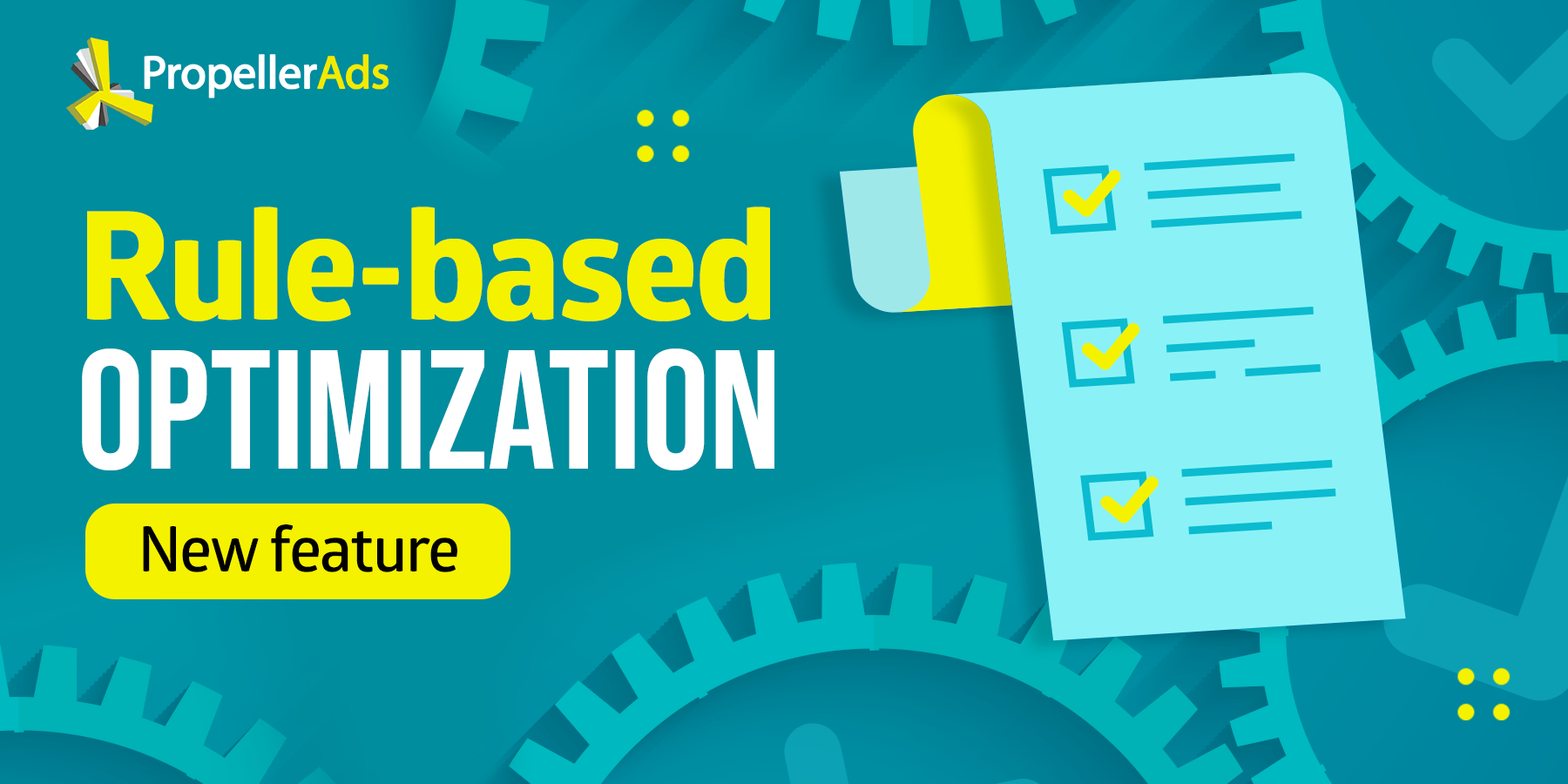
- Rule-Based Optimization – automated campaign rules that allow advertisers to set performance conditions (for example, CPA, conversions, or spend limits) and automatically pause, adjust bids, or blacklist underperforming zones.
- Automated Creatives – built-in tools that generate and rotate ad creatives to identify combinations with stronger engagement and conversion performance.
- Advanced targeting options – including GEO, device type, OS version, browser, connection type, carrier, and other traffic parameters.
- Zone-level optimization – advertisers can create whitelists and blacklists of placements based on performance data.
- Multiple ad formats – including Push Notifications, In-Page Push, Popunder, Survey Exit, Telegram Mini-App Ads, which allow advertisers to test and scale campaigns across different user interaction models.
In practice, this approach combines network-level inventory control and moderation, and programmatic-style optimization and automated bidding strategies within a single advertising platform.
To Sum Up
Ad networks and ad exchanges serve different roles within the programmatic advertising ecosystem. Ad networks provide a structured environment where advertisers can launch campaigns quickly, access curated inventory, and scale performance campaigns through built-in optimization tools.
Ad exchanges, on the other hand, offer broader access to traffic across multiple supply sources through real-time bidding auctions, giving advertisers more reach and control through DSP integrations.
In practice, many media buyers use both models depending on campaign goals. Networks are often preferred for performance-driven campaigns and predictable scaling, while exchanges are useful for expanding reach and testing additional supply sources.
Platforms like PropellerAds combine elements of both approaches, allowing advertisers to access multiple traffic environments while managing campaigns, optimization, and traffic quality controls from a single interface.
Frequently Asked Questions (FAQ)
Is it cheaper to buy traffic from an ad network or an ad exchange?
Direct ad networks are often more cost-efficient when advertisers buy traffic because the supply chain contains fewer intermediaries. Exchange-based buying may include additional platform fees and can involve lower-priority inventory, which may reduce performance efficiency depending on the supply chain.
Can an advertiser use both platforms?
Yes. Many advertisers combine both approaches: direct networks for stable performance and exchanges for additional reach or testing new supply sources. Exchanges can also provide access to inventory from networks that are difficult to join directly.
What is the difference between DSP and an ad network?
A Demand-Side Platform (DSP) is a buying platform that allows advertisers to access multiple ad exchanges and programmatic marketplaces. An ad network aggregates inventory from connected publishers and sells advertising placements directly to advertisers through its internal campaign interface.
Join our Telegram for more insights and share your ideas with fellow-affiliates!