Chinese New Year Ad Trends 2026: What Experts Expect to Peak
Just when the holiday hype starts to cool off, Asia shifts into Lunar New Year mode – one of the biggest celebrations of the year.
Chinese New Year, also known as the Spring Festival, is an ancient holiday that lasts for 15 days and has deep roots in archaic agricultural traditions.
Initially, it marked the transition from winter to spring – a symbolic “reset” when people clean their homes to sweep away bad luck, settle unfinished matters, and prepare for a new cycle of prosperity and wellbeing. It’s a moment to refresh routines and start the year on a positive note.
Sounds like a perfect moment for marketers to shine, right?
Well, we decided to ask our Chinese market experts and find out everything you need to know and prepare for: from GEOs and verticals to traffic sources and funnel adjustments.
Hop on – we’re heading straight into Lunar New Year traffic!
Lunar New Year Campaigns
Let’s start by introducing our experts – they’ll guide us through all the ins and outs of running ad campaigns during this festive season.
- MaxJmac, PropellerAds Partner and Affiliate Marketer
- Sam, Co-owner, Pantech Marketing Services
- Natalia Gudimova, Team Lead of China Team at PropellerAds
What GEOs to Target
First, we asked our experts which GEOs media buyers and affiliates should focus on. It’s a key point – for CNY offers to really work, you need an audience that actually feels the holiday hype and has an emotional connection to it.
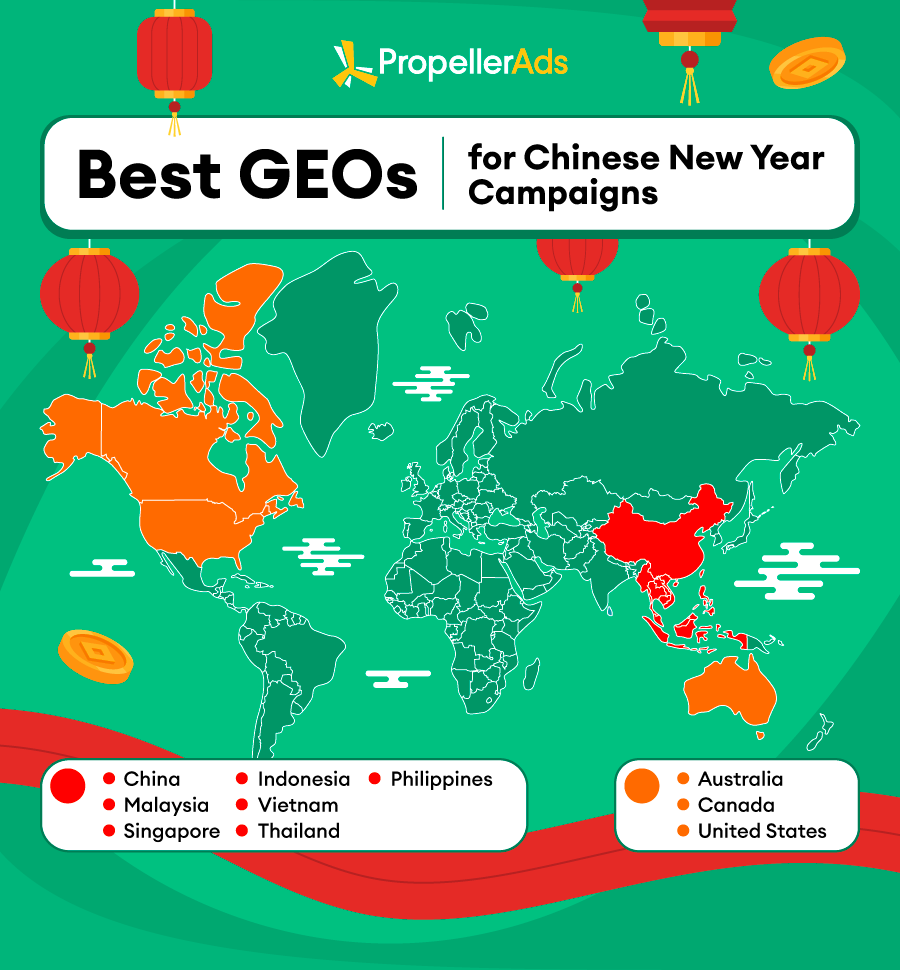
As per Sam, the main attention should be on Core Tier-1 – Mainland China. It’s the epicenter of the celebrations (and the competition), and it’s where CNY hype is at its strongest.
He also notes an important shift during the holiday: traffic often moves from 1st-tier cities to 2nd- and 3rd-tier ones as people travel back to their hometowns.
Beyond Mainland China, he highlighted a few strong GEOs that tend to perform well: Southeast Asia (Malaysia, Singapore, Indonesia, and Vietnam), plus Hong Kong SAR, Macau SAR, and Taiwan. And if you’re looking outside Asia, major Western metros like Sydney, San Francisco, London, and Vancouver can also deliver solid volume thanks to large Chinese communities.
From Propeller’s side, Natalia gets even more specific. If you’re running international-friendly offers like e-commerce, utilities, or entertainment, she says you can scale well in Thailand, Vietnam, Indonesia, and the Philippines.
For Tier 3 GEOs, she highlights diaspora-heavy markets that work great for e-com, travel, and entertainment – Australia (with a very strong Lunar New Year presence), Canada, and the US, plus parts of the EU, depending on your offer language and support.
![65K Conversions for Chinese iGaming Advertiser [Case Study]](https://propellerads.com/blog/wp-content/uploads/2025/02/PropellerAds-65k-Conversions-for-Chinese-iGaming-Advertiser.jpg)
Top Offers to Run
We mentioned that the Chinese New Year is all about symbolism and renewal, which is why the offers that usually perform best are those built around gifting and that “fresh start” mindset.
Also, people spend a lot more time on their phones during the holidays because this is when they slow down, travel, hang out with family and friends, and scroll way more than usual – which means more impressions, more clicks, and more room to test lighter, entertainment-driven offers.
Max says: “During CNY, people are basically in holiday mode. They’re not thinking long-term; they just want something fun, easy, or instantly rewarding. So stuff like e-commerce deals, casual games, and entertainment offers usually do really well.
For iGaming, if the GEO allows it, CNY is actually one of the strongest periods because people have time and they’re in a “let’s try my luck” mood. Anything that feels low-risk and quick to understand converts way better than complex offers.”
Sam confirms that “fortune” angles hit especially hard during CNY, and Finance/Wealth Management is where that “good luck + money” combo really clicks. Gaming and Entertainment tend to surge during CNY, with social and board games driving higher engagement and more in-app purchases.
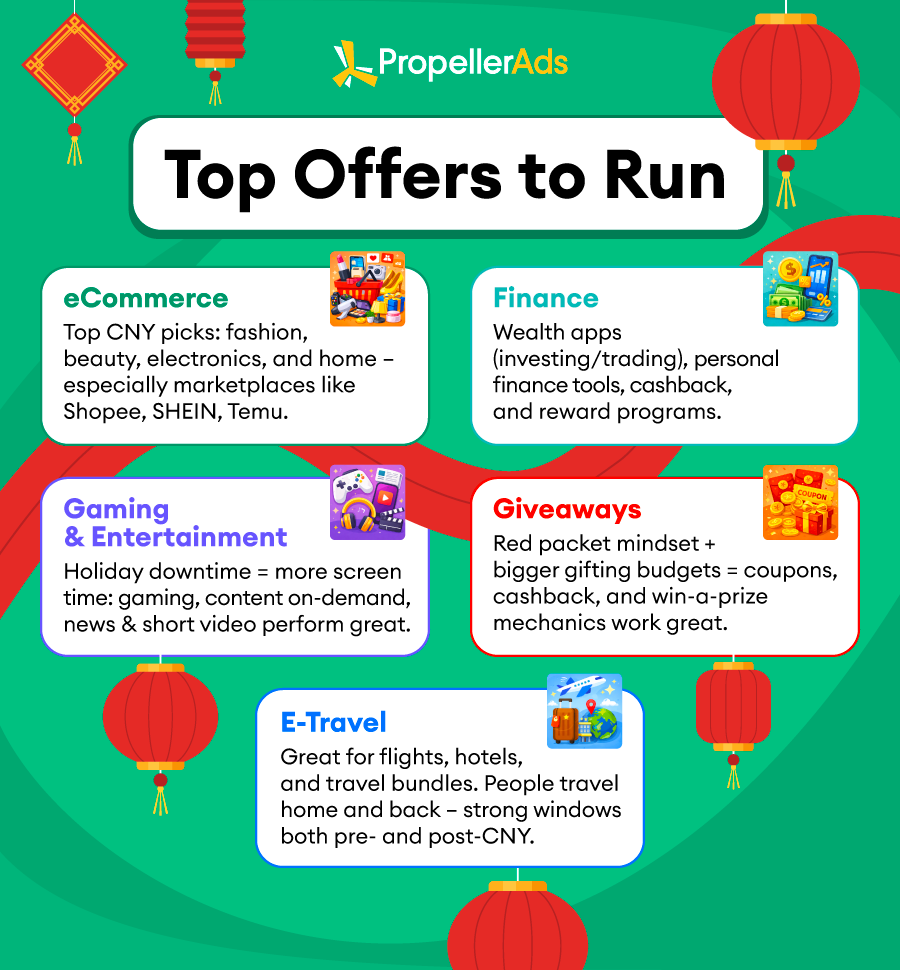
And honestly, eCommerce is the main character of the season. Gifting goes into overdrive (premium electronics, curated hampers, health products), and Fashion & Apparel follows right behind: new (and preferably fancy) outfits for the celebrations, lots of red, and a noticeable “treat yourself” upgrade into more premium picks.

According to Sam, here are the best offer types:
“Gift-Ready” Bundles, “Family Pack” Subscriptions, Digital Red Packet (Hongbao) Promotions (cashback, bonus credits), and “New Year Limited Edition” products. Offers that facilitate gifting or family sharing convert significantly better than generic individual discounts.”
Natalia agrees with Max and Sam – and adds Propeller’s perspective based on what we’ve been consistently seeing over the past few years during CNY:
- E-commerce: fashion, beauty, electronics, home, think big brands like Shopee, Shein, Temu
- E-Travel: travel demand spikes around the holiday season, think Booking.com, Trip.com
- Entertainment & Content: content on demand, news, YouTube videos, short videos
- Giveaways: red packet mindset + gifting budgets (great for coupons/cashback/Win a prize) mechanics
What Traffic Sources to Choose?
Now that we know what to run and which GEOs to target, the next logical question is: what traffic sources should you use?
There are a few solid options – it all comes down to your vertical and how much production (creatives, funnels, localization… and budget) you’re ready to handle.
According to our China market specialists, CNY is one of those seasons where low-attention, mobile-first traffic is at the forefront – people are very relaxed and scroll more in short bursts. That’s exactly why, as Max puts it, “push and pop usually perform very well during CNY,” because users tend to “react more emotionally” and make decisions faster in this holiday atmosphere.
Across the board, the most reliable combo for CNY is Push + Pop. Push is perfect when you’re leaning into urgency & exclusivity (daily deals, countdowns, limited perks), and Natalia says push is the “best for time-boxed offers, fast testing, and reactivation.”

Popunder, on the other hand, gives you cheap reach and quick campaign scaling, especially during the pre-holiday shopping window. Natalia notes it’s “useful for cheap reach and scaling broad e-com promos.”
Social can work too – especially if you have suitable creatives to do it properly.
Quick tip: Even if you don’t, you can target social and Telegram audiences in Propeller, and get the creme-de-la-creme of holiday traffic.
Platforms like Douyin, Xiaohongshu, and WeChat are “kings,” and that festive, storytelling in-feed videos that show the product can perform exceptionally well, as Sam points out.
Another tip: you can always collect audiences from these sources for retargeting, and then run follow-up campaigns on Propeller to reach those same users again.
But it’s worth keeping expectations realistic: Max warns, “competition and costs tend to go up during the holiday,” so social isn’t always the most efficient option if you’re looking for quick wins.
And if your offers rely on promos, rewards, or giveaways, you can look beyond the usual formats. Natalia suggested Survey Exit because it can be a surprisingly cost-efficient source during the holidays, especially since “giveaway mechanics align well with the CNY mindset, tapping into themes of luck, rewards, and small wins.”
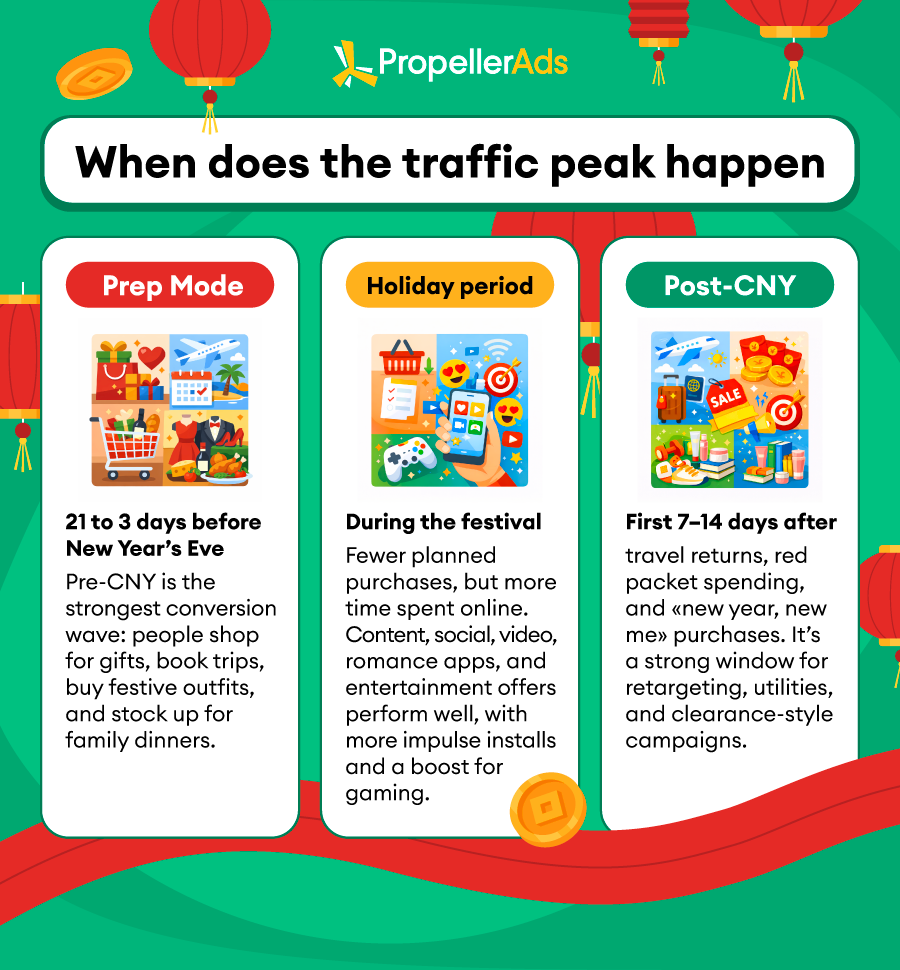
When does the traffic peak happen: before CNY, during the holiday, or after?
Based on Statista data, we can see that spending usually starts ramping up about a week before the festival kicks off.
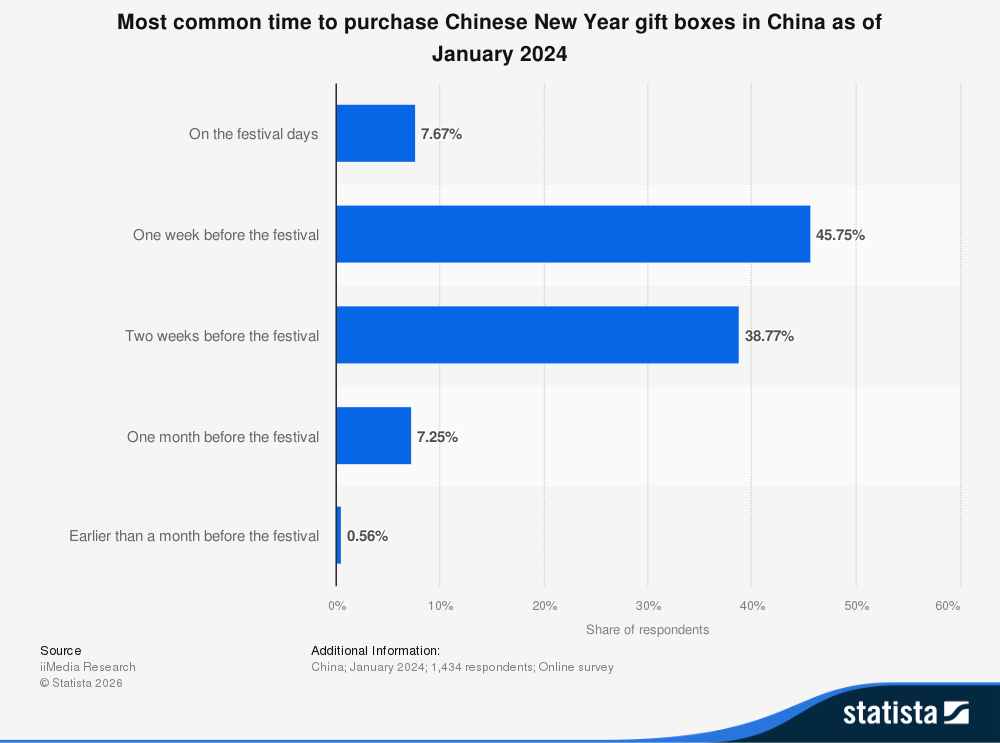
Source: Statista
But cold numbers are one thing, and timing your campaigns in real life is a whole different challenge. So we asked our experts to explain exactly when to launch and what to expect at each stage, based on their very own experience.
In practice, CNY traffic follows a pretty clear three-wave pattern:
- Prep Mode
The first (and the strongest in terms of conversions) wave happens before the holiday, when people are buying gifts, booking trips, shopping for fancy festive outfits, and stocking up on food for family dinners.
Sam calls it the “golden period for conversions” and defines this window of opportunity as roughly 21 to 3 days before New Year’s Eve.
“Before CNY, people are shopping and preparing, so e-commerce works really well,” says Max.
- Holiday period
The second wave takes place during the holiday itself. Sam describes it as an “engagement peak”: fewer planned purchases but much more time spent online.
On the Propeller side, Natalia sees the same behavior shift: people dive into content, social, video, and even romance apps, and if purchases happen, they’re often more spontaneous – impulse deals, quick installs, and a big focus on entertainment. This is the moment when gaming offers usually get a boost, simply because traffic volume and engagement are at their highest.
- Post-CNY
Then comes the third wave: post-CNY. Once people return to their normal routines, the market doesn’t just switch off – it changes shape.
It’s the secondary peak, driven by people returning to their hometowns, spending gifted money (red packets), and that classic “new year, new me” mindset.
The same post-holiday window (the first 7–14 days after) is a strong time for retargeting, utilities, and clearance-style campaigns, when people get back to their normal everyday life.
What user behaviors change during the Chinese New Year?
Since we’ve already started talking about timing and traffic spikes, it’s time to look at user behavior, because that’s what drives conversions in the first place.
During CNY, people don’t just buy different things – they use apps differently. So what exactly changes in shopping patterns and app usage throughout the festival? And how does it affect the time people spend online?
The biggest shift during CNY is obviously time, as Max puts it, “People suddenly have a lot of it… and spend way more time on their phones.”
And with that extra time comes a different vibe: decisions get less rational and more emotional. Users compare less, hesitate less, and “click faster.”
Shopping behavior changes too: it stops being “I want this for myself” and turns into gift-first spending. Sam usually sees higher AOV (Average Order Value) and a last-minute rush on presents and holiday essentials.
From a practical standpoint, we see more premium items, “good-looking gift” packaging, and convenience features like fast shipping (we know the regular issues with delivery on holidays, when post offices and couriers are overloaded) and easy returns matter a lot more than usual.
App usage follows the same logic. During the holiday downtime, people lean hard into time-kill mobile habits: short videos, messaging, and gaming. This way, users convert more easily on paid subscriptions and content.
However, according to Max, productivity and work-related apps drop noticeably because CNY is simply not the season for “serious mode.”
One more detail that’s super useful for campaign planning: installs and usage don’t always peak at the same time. Natalia shared what she’s been noticing over the years: installs often grow before the holiday travel rush, but usage and engagement spike during the break, when people finally slow down and have time to scroll for real.
What creative angles work best for CNY?
Okay, now we know the drill: people are relaxed, scrolling a lot, and suddenly have way too much free time on their hands.
So how do you appeal to this chill audience?
Statista gives us a hint at what we could focus on.
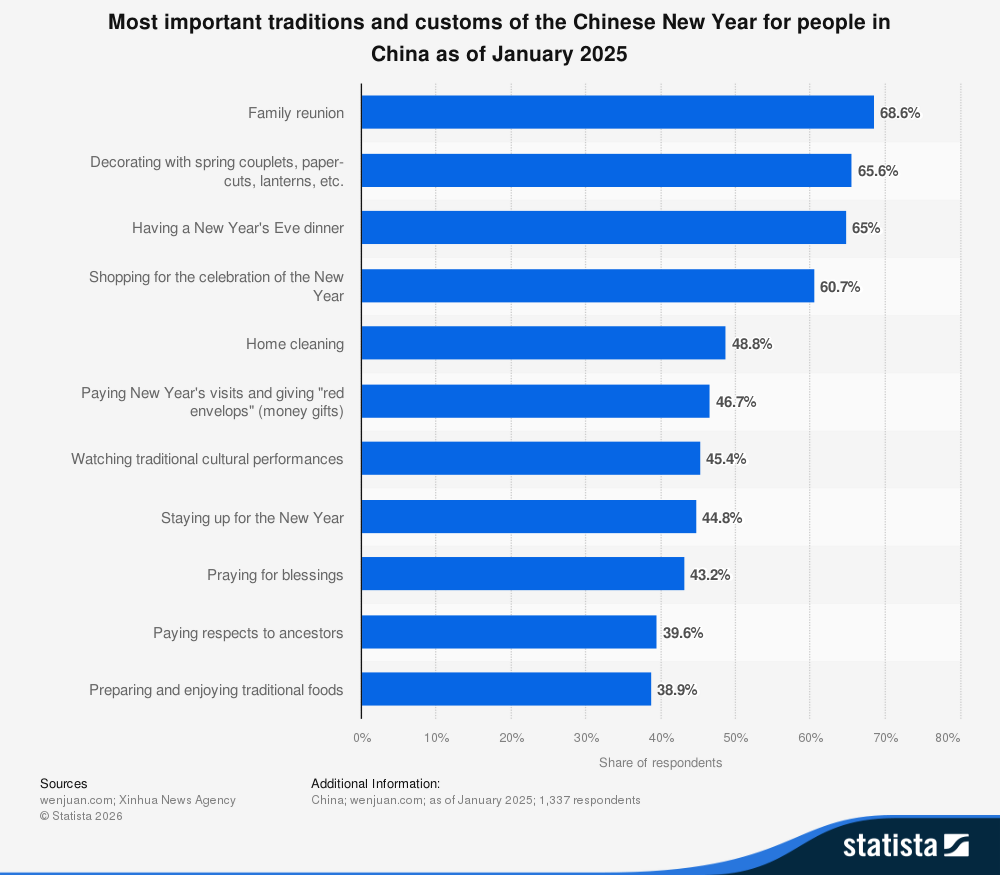
Source: Statista
Hmm, do you lean into luck & fortune, go full “new year, new me,” or focus on gifts, big promos, and family-driven themes?
Yep, tough choice.
If we had to sum it up, Lunar New Year creatives tend to perform best when they tap into luck, gifting, and that “special holiday window” urgency. People are already in the mood to believe in good signs, grab a deal, and start the year on the right note, so you don’t have to over-explain or overcomplicate anything.
Here are your go-to creative formulas:
- Luck & fortune (Obviously!)
It’s one of the most natural hooks for the season, and it instantly clicks with the audience, as Max puts it, “anything about good fortune, starting the year right, really connects with users.”
Natalia shared with us her favourite performance-friendly phrasing, such as “lucky price,” “prosperity deal,” or “red packet savings.”
As for the visual side of things, Sam recommends going heavy on classic CNY symbolism: red and gold, lanterns, dragons, money cats, and the 福 (Fu) character, since prosperity messaging is basically the default language of the holiday.
- Gifting
Gifting & personal value beat generic discounts. Users are shopping with someone else in mind, and creatives that clearly frame the product as a gift tend to work better.
Sam suggests being super direct with messaging like “The Perfect Gift for Parents” or “Share with Family.
“Gift or bonus-style creatives do better than pure discounts.” Discounts still work, of course, but Sam’s idea is important: during CNY, they’re very much expected (almost a must), so they need a nice seasonal wrapper like “New Year Blessings” or “Prosperity Sale.”
- Urgency
This one is classic. Our experts say that urgency works great during CNY because the whole season already feels like a limited-time moment.
Here’s another recommendation from Natalia, along with her preferred push-friendly mechanics like countdowns, “ends at midnight,” and “holiday-only.”
- A horse
Okay, not just any horse 😀
You should use the year motif. And this year is the Year of the Horse, and Sam notes it’ll be everywhere, even premium brands use the symbolism, so it’s an easy way to make your creative feel instantly seasonal and up-to-date.
A quick caution, too: if you’re going heavy on cultural cues, avoid the obvious pitfalls, Sam advised to skip white/black-heavy designs (mourning association) and be careful with unlucky numbers like 4.
What funnel adjustments work best?
And now, we’ve basically reached the bottom of the funnel (aka we’re getting close to the finish line), so it’s time for the practical stuff: the technical tweaks and signature optimization moves our experts use during CNY.
So how do they make holiday funnels convert? What’s the secret sauce?
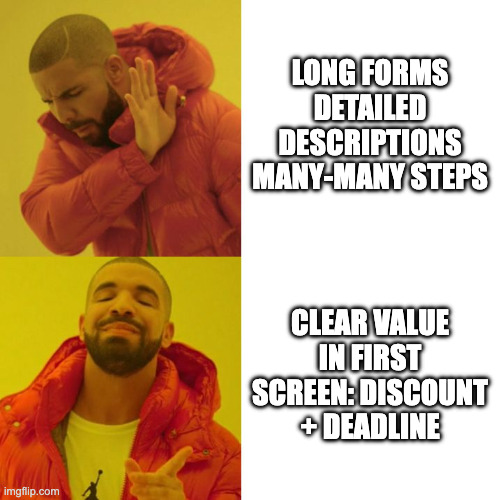
If there’s one rule for CNY funnels, it’s this: simplify everything.
People are distracted (or can’t focus?) and constantly on the move, and they’re not in the mood to read in-depth materials, compare, or think too hard.
Max nails it: “Everything needs to be simpler… one clear message, one main CTA.” And if the value isn’t obvious instantly, “they’ll just close it and move on.”
So your funnel should be shorter, faster, and 100% mobile-first. That means quick-loading pages, fewer fields, fewer steps, and the key promise right on the first screen.
Natalia recommends: “Clear value in first screen: discount + deadline.” The less friction between click and conversion, the better.
You can still use pre-landers, but only if they actually help. Sam notes they work best when they’re highly visual and inspirational, like a quick “gift picker” experience, and he suggests formats like curated ‘Top 10 gifts’ lists or lightweight “Gift Finder” quizzes.
Finally, CNY is when UX details can make or break the whole flow. Sam recommends removing checkout friction (think guest checkout and fewer fields) and making payments feel native with local options like AliPay and WeChat Pay, as well as region-friendly alternatives like GrabPay in SEA.
He also calls out a small but powerful conversion trigger: highlight shipping deadlines for last-minute shoppers.
In short: fewer steps, faster pages, clear value upfront, and a frictionless checkout – that’s your CNY funnel formula.
TLTR: What we need to know about the Chinese New Year Campaigns
- Target the right GEOs: Mainland China + SEA (MY/SG/ID/VN/TH/PH) + HK/Macau/Taiwan + diaspora markets (AU/CA/US).
- Run seasonal winners: eCommerce + travel + entertainment/content + giveaways + fortune-style finance offers.
- Use the right sources: Push for urgency, Pop for cheap scale, In-App for holiday engagement. Social can work too (but gets pricey), so a smart move is mixing formats and other sources like Google Ads and Meta ads, and building retargeting audiences to bring users back with a stronger offer later.nfr yfgbcfyj
- Plan around 3 waves: Pre-CNY = conversions, Holiday week = engagement, Post-CNY = retargeting + “new year reset”.
- Keep it simple: luck/gifting/urgency creatives + fast mobile funnels (one message, one CTA, low friction).
Chinese New Year is a special season and a great opportunity not only to run some of your most exciting campaigns, but also to connect with Asian audiences in a way that actually feels meaningful. Tap into the right symbolism, match the holiday mindset, and you won’t just drive results – you’ll make your ads feel like part of the celebration.
Happy New Lunar Year, guys!
新年快乐
Join our Telegram for more insights and share your ideas with fellow affiliates!
Trends
View more posts